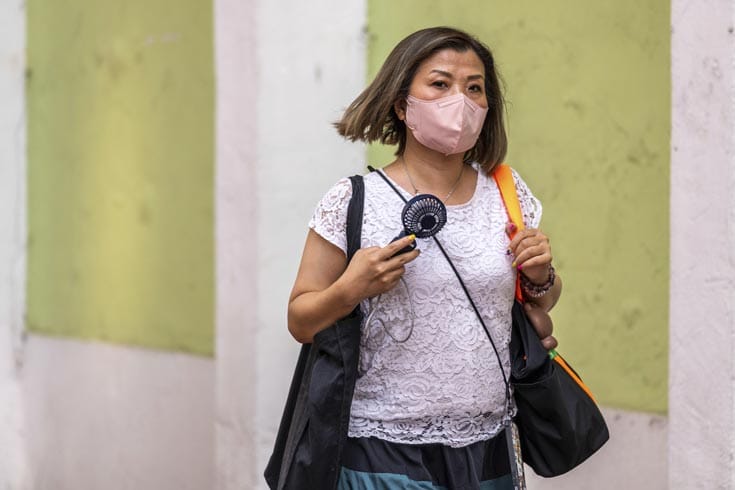
For this issue, we handed things over to Jessica Kutz, the climate reporter at The 19th News, a nonprofit news organization that reports at the intersection of gender, politics, and policy. For the last five years, she has focused on how climate change affects women’s health and also their pocketbooks, parenting, and activism.
Story Spark: Women’s Health
Women and girls carry a disproportionate burden from the climate crisis. They are more likely to lack the resources they need to recover after a disaster, live in substandard housing that’s more exposed to the elements and, in times of crisis, are more likely to navigate trauma and displacement while being the sole caregiver for a family member.
Just as importantly, their health — and, if they are pregnant, that of their fetus — is vulnerable to a host of environmental hazards made worse by climate change. Wildfire smoke and extreme heat are also strongly linked with adverse birth outcomes, including low birth weight, miscarriage, and preterm birth. Disasters disrupt access to menstrual and reproductive health supplies. And as a baseline, women are physiologically more susceptible to extreme heat than men, something that early research suggests can make menopause symptoms worse.
And yet, women’s health is vastly understudied — and in the US, research on both climate change and gender has come under attack.
Reporting Tips
Reach out to birthworkers. In many ways, medical associations are still catching up on how to treat and advise pregnant people about the dangers climate change poses to their pregnancies. Midwives and doulas, on the other hand, protect the health of a pregnancy more holistically. They can see if a patient’s home has air conditioning, identify potential work hazards, and advise when a pregnant person has questions about things like wildfire smoke. Because of this, I have found midwives and doulas to be great experts. They also play crucial roles after a disaster hits a community by connecting pregnant and postpartum people to healthcare and other resources.
Consider the context of the country. Socioeconomic and cultural factors create different types of vulnerabilities that can’t be applied globally — what’s true in India may not be true in the US. Leaning on global statistics around issues like women’s lack of access to water or even mortality rates of women during heatwaves may not be accurate for your country.
Connect the dots and dig deeper. How climate change impacts women specifically is underreported. To get you started, here are a few ideas to explore: Women’s ability to control their reproductive health can be affected by climate change. Did a disaster in your community make it more difficult to travel for a pregnancy? Or for an abortion? Or to access emergency contraceptives or menstrual hygiene products? Is anyone doing anything to fill in the gaps?
Women are more likely than men to develop dementia and people with dementia are more susceptible to health consequences of extreme heat; several lawsuits have been filed against senior care facilities after women have wandered away and subsequently died due to extreme heat.
More prompts to get you started. What policies are in place to protect women with some of these health conditions from climate disasters? Has a disaster or incident in your community highlighted the absence of such policies or a lack of preparedness? Pick a health condition and explore whether it disproportionately impacts women and has a climate connection.
Stories We Like
For stories to help inspire your reporting on the intersection of women and climate change, check out Kutz’s author page on The 19th News. We particularly like these pieces:
- A group led by formerly incarcerated women who sued to get air conditioning in every Texas prison — and won.
- Parenting through the LA wildfires was a challenge — with mothers helping their children cope with the loss of safety and stability amid a climate disaster.
- Hurricane Helene, which was made more powerful due to climate change, impacted the already fragile reproductive health ecosystem in the Carolinas.
 Jessica Kutz is the climate reporter at The 19th News, a nonprofit news organization that reports at the intersection of gender, politics and policy. Kutz wrote today’s edition of Locally Sourced.
Before We Go…
The next Locally Sourced will revisit and explore climate change’s impact on home insurance. Homeowners are facing soaring insurance costs — or the loss of coverage altogether — as extreme weather becomes more frequent and intense due to climate change. Have you reported on this growing issue? Send them to us at local[at]coveringclimatenow[dot]org. We’d love to consider them for the next edition of Locally Sourced and our media trainings and social platforms.
Want more story ideas? Check out the Locally Sourced archive for more topics to explore, including AI data centers, coastal flooding, air transportation, and more.
Know someone who might be interested in this newsletter? Forward Locally Sourced to a colleague!
Support Covering Climate Now
We’re working to help journalists worldwide improve and expand their climate coverage. Meet our staff and learn more about CCNow.