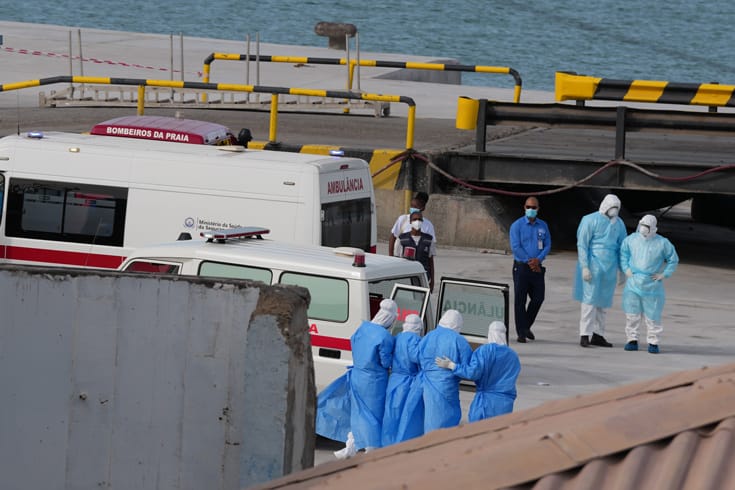
The signs now are that the hantavirus is not the next pandemic. But with 2026 predicted to be the hottest year on record, the hantavirus outbreak is a warning of what public health experts have long said: A hotter planet is a deadlier planet.
Rising global temperatures and the impacts they trigger — harsher heat waves, stronger storms, and wider spread of infectious diseases — endanger human health in myriad ways. The world’s top medical societies have been sounding the alarm since 2009, when the journal The Lancet called climate change “the biggest global health threat of the 21st century.” Lancet’s 2025 report found that climate change is responsible for “millions of unnecessary deaths a year,” with excess heat alone killing 546,000 people.
The Associated Press and CNN appear to be the first major news organizations to make the climate connection to the hantavirus outbreak on a cruise ship that departed Argentina on April 1. CNN reported that hantavirus has long been present in the far south of South America, but its frequency has increased recently in Argentina, where cases “have almost doubled in the past year, with the country recording 32 deaths alongside its highest number of infections since 2018,” according to the Argentine health ministry. Citing local public health researchers, the AP reported that “higher temperatures expand the virus’ range because … rodents that carry the hantavirus can thrive in more places.” A historic drought that drove animals beyond their normal habitats in search of food was followed by intense rainfall. “When precipitation increases, food availability increases, rodent populations grow, and … the chance of transmission between rodents — and eventually to humans — also increases,” Raul González Ittig, a researcher at state science body CONICET, told the AP.
Three passengers on the cruise ship have died from hantavirus, and nine have contracted the virus. The World Health Organization has emphasized that the risk to the general public is very low, and there is no danger of a pandemic akin to the Covid-19 contagion that convulsed the world in 2020.
The link between hantavirus and climate change remains far from definitive; more research is needed to determine how large a role climate change played in this particular outbreak. Journalists can help by reporting on this research as it unfolds and asking public officials what steps they are taking to keep communities informed and safe.
Journalists can also alert our audience to a broader warning that scientists have long issued. As recently explained in the Journal of the American Medical Association, higher temperatures allow mosquitoes, ticks, and rodents that carry infectious diseases to spread to previously inhospitable areas, increasing the threat to humans from malaria, cholera, Lyme disease, and other maladies.
Higher temperatures are exactly what the months ahead will bring across much of the Northern Hemisphere. This year is expected to be the hottest in recorded history, thanks to an El Niño super-charging global temperatures that are already amplified by climate change. Besides threatening human health directly, this heat will also make drought and wildfires more likely.
Too often, news coverage of extreme weather disasters has been silent about climate change’s role; for example, most reporting on the mega-fires that scorched Los Angeles in 2025 focused on the roaring flames but ignored what helped spark them in the first place. CCNow’s recent white paper on the state of climate journalism applauded AP and CNN for their sustained commitment to climate coverage at a time when “climate hushing” has afflicted many other news organizations, especially in the US. That commitment is what enables the AP and CNN to see the climate connection to breaking news like the hantavirus and inform their audiences accordingly. As hotter and more extreme weather confronts much of the world in the months ahead, these AP and CNN stories offer an exemplary model for how all of journalism can do better.
From Us
CCNow Basics: Reporting Solutions. Climate change remains the defining story of our time, making solutions journalism more important than ever. Join us Thursday, June 4, for a live training session to learn how to identify and interrogate climate solutions. Together, we’ll explore how to tell the whole story. Learn more + RSVP.
RSVP: 2026 Hurricane Season — What You Need to Know Ahead of NOAA’s Outlook. Join CCNow and Climate Central on Wednesday, May 20, for a special webinar examining climate change’s “fingerprint” on warm ocean waters, what we can learn from 2025, and how to make the climate connection in advance of NOAA’s first prediction about the upcoming Atlantic hurricane season, which will be issued May 21. Learn more + RSVP.
Radar Clima: hantavirus. En la última edición de Radar Clima, nuestro boletín en español para periodistas de todas las áreas, contamos por qué el brote en el crucero MV Hondius tiene un ángulo climático que casi ningún medio ha contado. Datos clave, recursos y voces expertas para cubrir la historia con rigor y sin alarmismo. Mira aquí las ediciones anteriores y suscríbete para recibir el boletín los miércoles.
Noteworthy Stories
Wind chill. Despite increasing demand for electricity, the Trump administration has paused permitting reviews on 250 wind projects across the country, “effectively jeopardizing all new wind projects on private land.” By Kathryn Krawczyk for Canary Media…
Moving on, without the US. China, the EU, and Brazil are leading a coalition of countries to increase efficiency, build trust, and encourage investment in global carbon markets. Coalition members hope to do that by standardizing carbon pricing mechanisms across jurisdictions. By Ewa Krukowska for Bloomberg Green…
What’s that sound? Researchers are on a mission to save a dying coral reef off the coast of Jamaica by playing the sound of healthy reefs, using underwater solar-powered speakers, to encourage growth and regeneration. By Ben Tracy for PBS NewsHour…
Hogwash. Animal agriculture accounts for at least 16.5% of global greenhouse gas emissions, making it the second largest emitter after fossil fuels. A new study published in the open-access journal PLOS Climate finds that 98% of climate-related commitments made by meat and dairy companies could be categorized as greenwashing. By Shanna Hanbury for Mongabay…
- US retailer Wild Fork Foods promotes its meat products as sustainable, local, and bespoke, with “butchers” and “in-house chefs” selecting cuts, but the company is owned by JBS, the largest meatpacker in the world. By Nina B. Elkadi for Sentient Media…
Climate shocks spark conflict. Researchers studied hundreds of armed conflicts over the past 75 years and found that the risk of violent conflicts grew during El Niño events. The effect was most pronounced in Central America and southern Africa, areas where El Niño has worsened drought. By Bob Berwyn for Inside Climate News…
Quote of the Week
“[T]he climate crisis is simultaneously an ecological crisis, a cost of living crisis, and a health crisis. Climate policy that tackles multiple problems at once would have not only broader impact, but broader appeal.”
– Hannah Story Brown, deputy research director on climate and governance at the Revolving Door Project
Resources & Events
Rising demand, lower costs. Rewiring America’s “Homegrown Energy: A policy blueprint for energy affordability” blueprint offers analysis and recommendations for state-level electrification policies that would lower the energy costs of 96% of American households.
AI in the newsroom. Join San Francisco State University professor Yumi Wilson for “Covering the Planet with the Tools That Tax It: AI for Climate, Science and Environmental Journalists,” on Thursday, May 21, at 12pm US Eastern Time. Sponsored by the Metcalf Institute and the Solutions Journalism Network. Learn more + RSVP.
¿Quieres aprender a cubrir la crisis climática desde el periodismo de investigación? En este curso de cuatro semanas (del 1 al 28 de junio) podrás conocer las herramientas, técnicas y estrategias para hacerlo desde cualquier especialidad. Organizado por el Knight Center y desarrollado por los instructores Diego Arguedas Ortiz y Toby McIntosh. Más información y regístrate.
2026 Visualising Climate conference. Communicating climate challenges effectively requires an interdisciplinary approach melding science, storytelling, data, and design. Bringing together scientists, artists, communicators, and journalists, this global conference from November 4–6 in Bologna, Italy, aims to put everyone in the room together. Learn more.
Jobs, Etc.
Jobs. The Bulletin of Atomic Scientists is looking for a new Editor in Chief (remote). ProPublica is seeking a Senior Editor “devoted to journalism with moral force” to lead a new investigative unit in California. Mongabay is looking for a Philanthropy Associate (remote). CBC News is looking for a Senior Producer to lead the health, science and climate unit (Toronto). The Daily Record in Wooster, Ohio, is seeking a Public Trust Reporter, producing accountability journalism where policy, culture, economy and environment intersect (virtual). Lighthouse Reports is hiring a Climate and Environment Editor (remote). Politico is looking for a Deputy Editor, Energy & Environment (Arlington, Va.). World Wildlife Fund seeks an Associate Specialist, Climate Communications (Washington, D.C.).
Internship. CarbonBrief is offering a three-week journalism internship this summer. (London).
Training. Solutions Journalism Network Train-the-Trainers opportunity exclusively for journalists in Sub-Saharan Africa. Looking for journalists, educators and media makers who want to learn to teach solutions journalism. Across five days, you will get immersive, in-depth solutions journalism training so that you can bring it to newsrooms, students, journalists, or communities that might benefit from it. Apply by this Friday, May 15.
Fellowships. Climate Tracker Asia is accepting applications for the NextGen Climate Bootcamp 2026: Voices of Philippine Youth; apply by May 22. Climate Tracker Caribbean is accepting applications for the Deep Sea Mining Fellowship; apply by May 22. The Pulitzer Center is accepting applications for its Rainforest Investigations Network Fellowships; apply by May 22.
CCNow in the News
- Rolling Stone: Don’t Overlook This Surprising Climate Victory by Mark Hertsgaard
- SEJ Blog: Graphic Content — Journalistic Lessons From Crossing Genres by Meera Subramanian