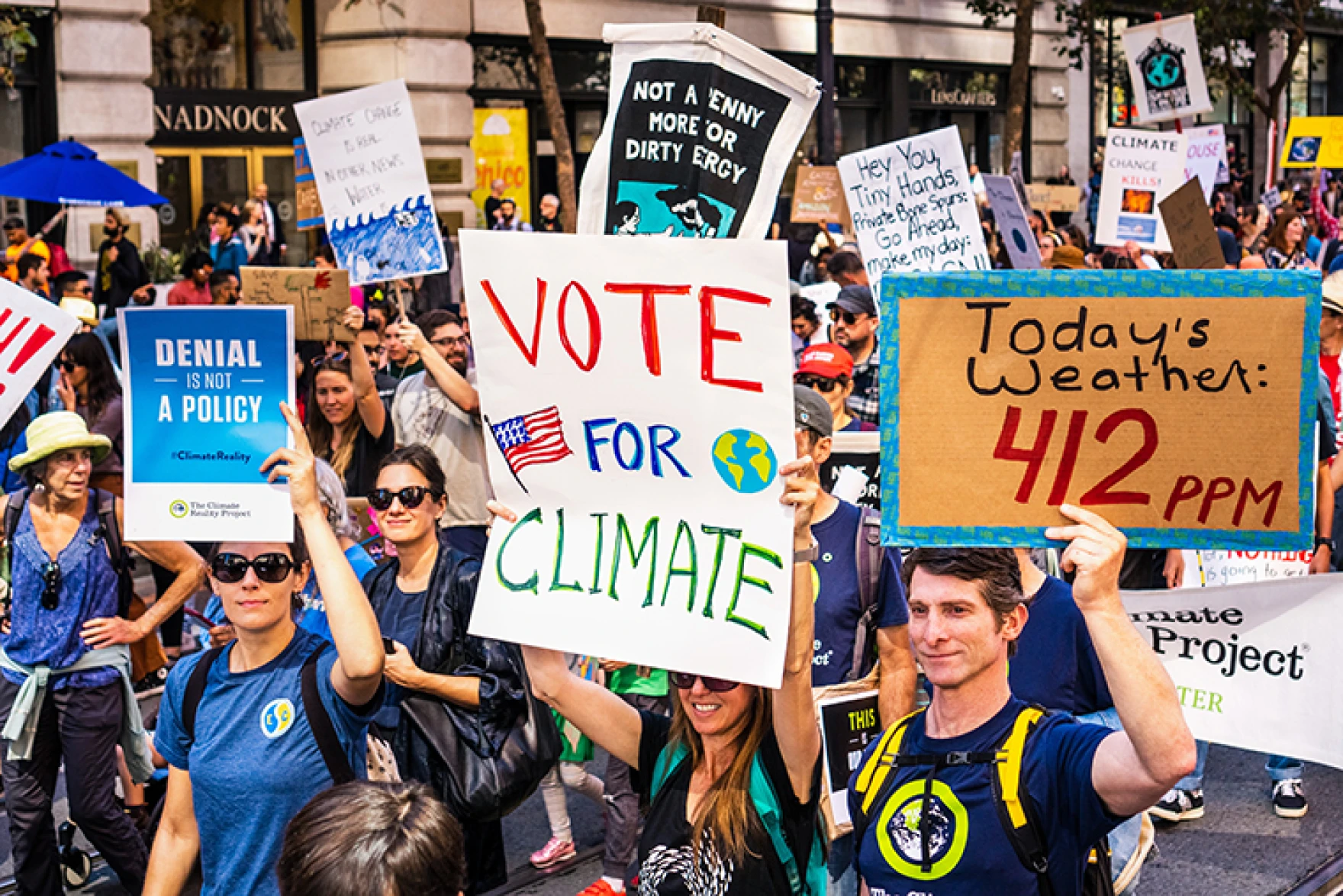
The economy, cost of living/affordability, and data centers are top issues in the November elections, and climate change and climate solutions are essential considerations for voters on all three.
Energy bills are skyrocketing and clean energy offers a solution: Solar and wind are now the cheapest sources of new electricity. Meanwhile, data centers face steep public opposition: Seventy-five percent of Americans don’t want them nearby, but polling shows there’s bipartisan support for making those companies pay for household energy upgrades that lower bills in nearby communities.
Climate change may not a top priority for voters, but it’s on their minds. A new poll from the Environmental Voter Project finds that 59% of likely midterm voters in eight battleground states want politicians to talk more about climate change and pollution. Among the 81% who said that they wouldn’t rule out a candidate who makes transitioning away from fossil fuels a top priority, seven out of 10 said they would be more likely to vote for them.
Despite that, candidates aren’t talking about climate. Since 2024, incumbent politicians, candidates, and large swaths of the media have grown increasingly quiet on climate change. “Climate hushing,” it’s come to be known. The trend persists even when the climate connection is crystal clear, as it is with energy affordability and cheap, clean energy.
CCNow is encouraging journalists at the local, state, and national levels to help voters understand the many ways that climate change is on the ballot this November. Share your climate-midterms reporting here!
New Local Data Tool for Journalists
How Climate Impacts Rising Costs in Your Area. Climate is on the ballot this November, even if few candidates are talking about it. Affordability is a top concern for voters, and climate change is pushing up the cost of living. CCNow’s new tool helps journalists show that connection locally, linking household bills to the climate impacts partly responsible for them. Public opinion data and congressional voting records show how voters’ climate concerns compare with how their representatives vote on the environment.
Relevant Polls & Studies
To help journalists ramp up their election reporting, CCNow offers these links to relevant polls and studies:
- Midterm Battleground State Poll: Political Priorities & Opinions on the Clean Energy Transition (Environmental Voter Project)
- Polling: Politicians Shouldn’t Hide From Climate (University of California Santa Barbara, The 2035 Initiative)
- Why ‘Clean Is Cheap, Cheap Is Clean’ Isn’t Breaking Through (Heatmap)
- Gray Is the New Green: The Growing Strength of Older Climate Voters (2025) (Environmental Voter Project)
- Report: Communicating about Climate and Clean Energy in an Age of Affordability (Heatmap News)
- YPCCC Insights on Climate Change and the 2026 U.S. Primaries (Yale Program on Climate Change Communication)
- What do Global Warming’s Six Americas think about data centers? (Yale Program on Climate Change Communication)
- Fixing Climate Communications, a New Global Report (Potential Energy)
Dig Deeper
Get expert takes on voters and climate priorities with the latest polling, energy affordability, and candidates’ climate hushing, in these live conversations.
For more resources mentioned during the conversation, check out the event page for “Climate on the Ballot: Voters Want Candidates to Talk About Climate Change.”
For more resources mentioned during the conversation, check out the event page for “Rising Energy Bills, Climate, and the 2026 Midterms.”
Our Sharing Library helps CCNow partners amplify their outlets’ stories, by making them available to other newsrooms for republication, and helps partners expand their own coverage by running stories available for syndication.
And we want to hear from journalists and newsrooms. It’s our responsibility in an election year to inform voters about what’s at stake, and what the candidates plan to do about it. How can CCNow help you and your colleagues deliver on that responsibility?
