Story Spark: Home Insurance
For this issue, we’re revisiting an important topic we originally covered two years ago; in the interim, this crisis has only gotten worse.
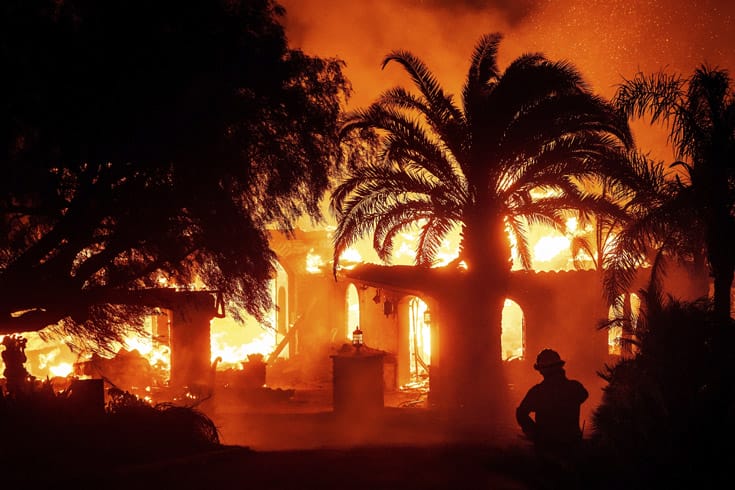
The cost of US home insurance has risen nearly 50% nationwide over the last five years as the frequency and severity of extreme weather have increased, driving up costs to repair, rebuild, and replace damaged homes. It’s not just that premiums are skyrocketing, as companies pull out of high risk areas (or simply go broke), it’s becoming harder to find insurance.
This rapidly evolving financial crisis has prompted many US states to develop an insurer-of-last-resort program, available to those who can’t get coverage from private insurance companies. Some of these programs, such as California’s FAIR Plan, were never intended to become a primary insurer and they’ve been bailed out after costly climate disasters — which further drives up insurance costs.
Given that someone has to foot the bill, with insurers worldwide paying out more than $140 billion in claims relating to natural catastrophes in 2024 — many homeowners are seeing higher premiums in areas that haven’t been hit by major disasters. A paper published earlier this year found that climate change is already costing US households between $400 and $900 a year, with insurance being one of the most direct ways a warming planet hits your wallet. With affordability being top of mind for voters, report on how much this insurance crisis is costing homeowners and investigate whether they know of the root cause of their rising premiums.
– David Dickson, CCNow
Reporting Tips
 This edition’s tips come to you from Chase Cain, an award-winning meteorologist and former climate reporter for NBC. Chase is now an independent meteorologist and journalist telling stories on his YouTube show “Chase What Matters,” which focuses on the intersection of the weather, climate, and nature.
Last month, Chase and other US-based independent journalists collaborated on a pop-up reporting project about housing and climate change called ‘Betting the House’. (CCNow advised and supported the project.)
The insurance crisis doesn’t just affect homeowners. Tens of millions of Americans rent. What happens to the people when they’re forced out of their homes by rising insurance costs? They rent. Or move somewhere less risky. We’re not building housing fast enough to meet demand, and rents are already on the rise. The cost to rent will only increase as climate-amplified disasters and risk force more Americans to move.
Entire communities are now uninsurable due to climate change. “Forced coverage” — also called “force-placed” or “lendor-placed” insurance — is when a homeowner can’t get insurance because the risk is too high, so their mortgage company forces coverage. That insurance is often more expensive than the monthly mortgage payment, and for most people, that means they can no longer afford their home — sometimes overnight. That financial Catch-22 forces homeowners to either sell quickly or wait for foreclosure. That’s already happening in many states.
Your tax dollars might be insuring the riskiest places to live. Maybe you’ve heard about when state-funded insurance companies — called “insurers or last resort” — step-in when private insurers won’t cover certain zip codes (or entire states). The state plans vary widely, and they’re not all popular. This is absolutely a topic worth investigating through FOIA requests and homeowners’ experiences.
Insurance companies have insurance too. You’ve probably heard of State Farm, Allstate, or Farmers Insurance. But have you heard of Swiss Re, Munich Re, or Lloyd’s? They’re the companies that insure your insurance company. In my experience, reinsurers are rich with data, research, and a willingness to talk. Because they don’t answer directly to homeowners, I’ve found they’re far more willing to discuss the drivers, problems with, and potential solutions to our insurance crisis.
We all have an emotional attachment to home. If a stranger told you to move-out of your home of 20 years, how would you feel? What if an insurance company made it so you couldn’t afford to stay, how would you feel? Watching our communities change, fade, or vanish because of the consequences of climate change bears an emotional toll. Explore this angle with the help of psychologists or mental health experts. That was also the foundation of my recent story about the challenges facing New Orleans that was part of a “pop-up” collaboration supported by CCNow.
Stories We Like
- Grist examines how an overlooked race for California’s insurance commissioner could shape how the state adapts for future climate disasters.
- In Florida, some homeowners are risking it all — going into hurricane season uninsured as some homeowner’s insurance has increased by over 1,000% over the past several decades, the Miami Herald reports.
- High Country News covers how scientists are working to better understand how climate change is increasing hail risks — the main factor driving up insurance premiums across much of the US.
- Even if you haven’t suffered direct damage, you’re likely paying for increasingly extreme weather. Yale Climate Connections explores this nationwide issue and possible solutions to avoid a looming insurance crisis.
Resources
- Track how US home insurance rates have risen over the past five years, and which states have seen the largest increases.
- Explore the racial inequality in the rising costs of insurance. Homeowners in predominantly Black and Hispanic zip codes are charged significantly more for the same home insurance coverage than homeowners living in predominantly white zip codes, according to a new report from the Consumer Federation of America.
- Check out the database of US Billion-Dollar Weather and Climate Disasters, once gathered by NOAA, now hosted on Climate Central’s website.
- Read First Street’s recent risk assessment report exploring the growing cost of severe storms.
- Dig into insurance broker AON’s latest Climate and Catastrophe report to understand how much climate disasters cost the global economy this year.
Experts and Sources
- Dave Jones, director, Climate Risk Initiative at UC Berkeley School of Law’s Center for Law, Energy & the Environment (CLEE), and former insurance commissioner for California
- Carolyn Kousky, founder and executive director, Insurance for Good
- Jesse Keenan, associate professor, Tulane University
Before We Go
Want more story ideas? Check out the Locally Sourced archive for more topics to explore, including AI data centers, coastal flooding, air transportation, and more.
Know someone who might be interested in this newsletter? Forward Locally Sourced to a colleague!
Support Covering Climate Now
We’re working to help journalists worldwide improve and expand their climate coverage. Meet our staff and learn more about CCNow.