
From the Team
Covering Climate Now is a global network of thousands of journalists and news outlets that reach a total audience of billions of people. We help fellow journalists tell the climate story with rigor, flair, and impact. Climate storytelling that engages audiences is, we believe, an essential climate solution.
But climate journalism is increasingly under stress — from insufficient revenues, staff cuts, and political headwinds. (Thirty percent of journalists we spoke with in early 2026 had been affected by funding cuts.) Yet, as this document reports, our fellow journalists remain committed to the work. And the work continues, because it has to.
This report is a reflection of what’s possible when a community refuses to retreat. It shows how our network expanded even as the underlying terrain shifted; how we worked together to raise the bar for climate journalism, while supporting journalists under financial and political strain; and how collaboration and commitment can spur progress at a moment of both peril and possibility.
CCNow is honored to be a place where journalists around the world come together to do this vital work. Whether you are a journalist yourself or simply someone who understands the value of civic minded, fact-based reporting, we invite you to join us.
Onwards,
The CCNow Team
Learn more about the CCNow team on our About page.
Insights From Our Community
In early 2026, CCNow explored the state of climate news via interviews with more than 30 of the world’s top journalists. The resulting white paper found that while “climate hushing” is more common in the US than it is globally, some outlets still prioritize the story, and audiences remain interested — but better storytelling is needed.
In a survey of the larger CCNow community, six out of 10 colleagues said CCNow had boosted their climate knowledge and that they’ve recommended our webinars and materials.
Quotes From the Frontlines
The work of CCNow is priceless in a world now deep into the climate crisis. It enables more and more journalists to do the vital work of holding polluters and governments to account and reporting on the solutions to global heating.”
– Damian Carrington, Environment Editor, The Guardian
The collaboration has reinforced a sense of solidarity, knowing that there are fellow journalists facing similar challenges, which has strengthened both the quality and confidence of my work.”
– Sugitha Sarangaraj, freelance journalist
Networking is critical to my role, so these connections are vital for myself and the growing community of Mongabay fellows.”
– Karen Coates, Fellowship Editor, Mongabay
The Resource Our Community Uses Most
Subscribers based across six continents named our newsletters the most useful resource that we offer. The steady source of story ideas, vetted reporting, and editorial framing helps journalists craft climate coverage that lands with audiences.
- The Climate Beat. Editorial guidance for covering climate, the week’s must-read stories, resources to help deepen your coverage, events, job opportunities, and more.
- Locally Sourced. Localizing global climate issues to help journalists explain the daily impact climate change is already having on their audiences.
- Radar Clima. Practical, Spanish-language guidance to help journalists across beats cover the climate crisis with rigor and context.
- Power & Progress. A short-run newsletter that dove deep into the climate and politics connection. We provided story ideas and resources to get reporters started.
- Climate at the Border. A short-run bilingual newsletter covering climate justice, migration, extreme weather, and economic impacts on the US-Mexico border.
“It’s made me aware of more coverage to watch and [it’s] helpful for keeping an eye on important stories.”
– Andrea Thompson, Senior Desk Editor, Scientific American
Subscribe to CCNow’s newsletter to get up to speed.
Highlighting the 89% Global Climate Majority
 For years, most media coverage has framed climate action as divisive, a fringe concern rather than a mainstream one. The peer-reviewed science tells a different story: 80–89% of people worldwide want their governments to do more on climate. The 89 Percent Project was built to close that gap, helping journalists and newsrooms report the climate story as what it actually is: one of major public concern.
Launched in April 2025, the project has brought together newsrooms across nearly 25 countries. During the first phase, outlets ranging from global giants like The Guardian and Agence France-Presse to local and student newsrooms reported on the existence of the climate majority. Then, for the UN climate summit COP30 in October, journalists explored the positive tipping points that moved members of the 89% from awareness to action.
In 2026, every TV station in Japan began airing the 89% message in public service announcements, while Oatly, the world’s leading oat milk company, printed the message on the hundreds of millions of cartons for sale worldwide.
Beyond Journalism
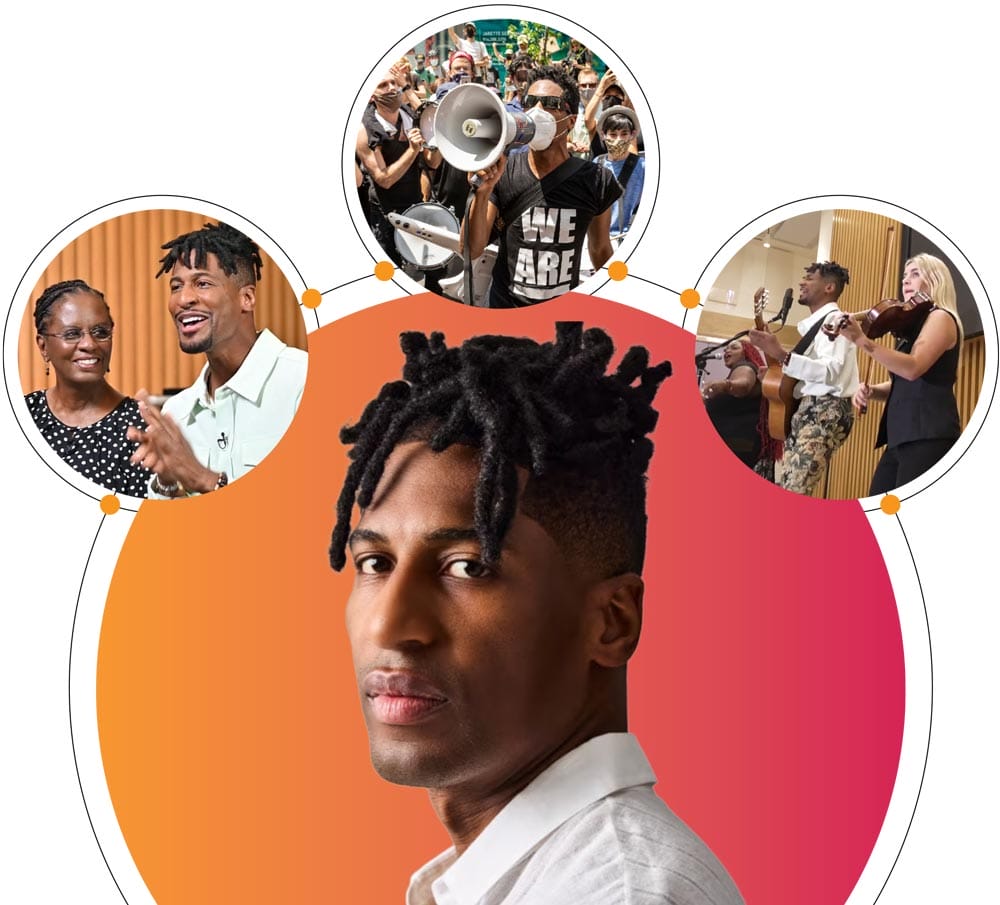
The project quickly grew beyond newsrooms into a broader cultural moment. People around the world embraced the message, sharing “I am the 89%” on social media, projecting it onto public landmarks, and amplifying it through art and music, including an interview and recorded performance with global music star Jon Batiste.
These moments helped reinforce a powerful idea: Most people already care about climate change; they just don’t see themselves reflected in the narrative.
“As an artist, you can connect right to the person — still also entertaining them, but uplifting them and their voice, so that then they know, ‘Oh, I have something to say, and it’s meaningful, and it’s powerful. I’m going to sing it at the concert, and I’m going to leave here and it’s going to be in my heart, and I’m going to go into the voting booth and push it. I’m going to go into my communities and push it, and I’m going to live my life in ways that are aligned with it.’ And that is infectious. It moves to the next person, and the next person, the next person, and soon it’s our reality.”
– Jon Batiste
Looking Ahead
The 89 Percent Project is now a guiding pillar across CCNow’s work. We use this frame to help journalists rethink their approach to the climate story, emphasizing that it’s not a minority issue, but a majority consensus. This insight is now embedded in our training, live conversations, reporting partnerships, and ongoing efforts to foster more accurate climate coverage.
Getting the climate story right is not about persuading a minority — it’s about helping a super-majority recognize its own existence.
Explore The 89 Percent Project.
Advancing Excellence in Climate Journalism
The 2025 Covering Climate Now Journalism Awards marked five years of celebrating outstanding climate reporting and of building community that, together, defines excellence in climate journalism.
At the center of that community are the judges; over five years, 239 journalists from around the world have weighed originality, impact, rigor, and context across multiple rounds of review.
Each season, the previous year’s winners are invited to judge and many go on to become CCNow Academy faculty, Climate Newsroom speakers, and live conversation panelists, building community that’s larger than any single award cycle: a growing cohort of journalists collectively raising the bar. Learn more about the Covering Climate Journalism Awards.
“Covering Climate Now has done a great job of helping support and rally climate journalists around the world. … I have been so grateful over the last 10 years for there’s been just a great surge in wonderful climate journalism.”
– Bill McKibben, 2025 Lifetime Achievement Award
Building Skills, Confidence, and Community
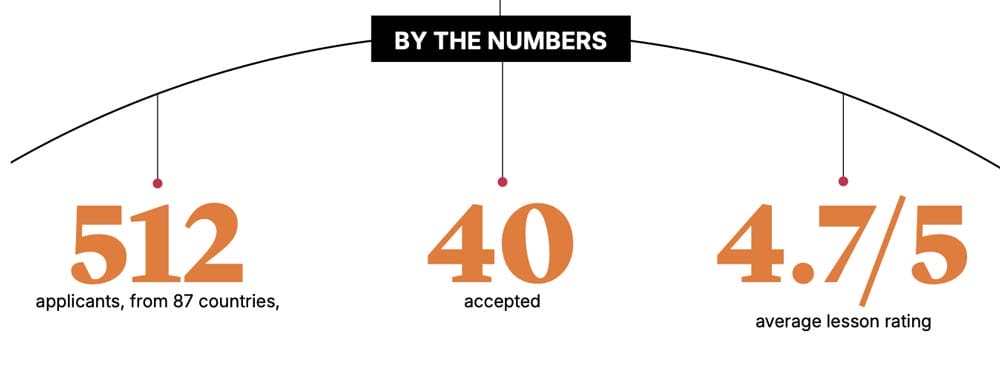
The Covering Climate Now Academy is a free, three-month, live online training program open to journalists anywhere in the world. Designed for early-career reporters building their climate journalism foundation, the program offers deep curriculum, expert instruction, and a global peer community to help participants produce more effective, audience-focused climate stories.
“In a few weeks, I became knowledgeable about climate change and how to report it. … It was a lifetime opportunity.”
– Rasheedat Oladotun-Iliyas, FRCN – Radio Nigeria
Learn more about the Covering Climate Now Academy.
Lightning Training for Journalists
Launched in 2025, The Climate Newsroom brought together over 150 US-based journalists in its first year for a lightning-format training built for working reporters who need practical climate tools, fast. Since, CCNow has offered the program in Canada and Nigeria. Designed for reporters already in the field, on any beat, the program delivers practical tools to connect weather to climate, identify misinformation, and humanize climate stories with accuracy and clarity — in a condensed format that fits a busy newsroom schedule. Learn more about The Climate Newsroom.
“It was comforting to know there are others out there working in this space and trying to help solve this global issue in our own little ways.”
– anonymous
Increasing Climate Coverage in the Global South
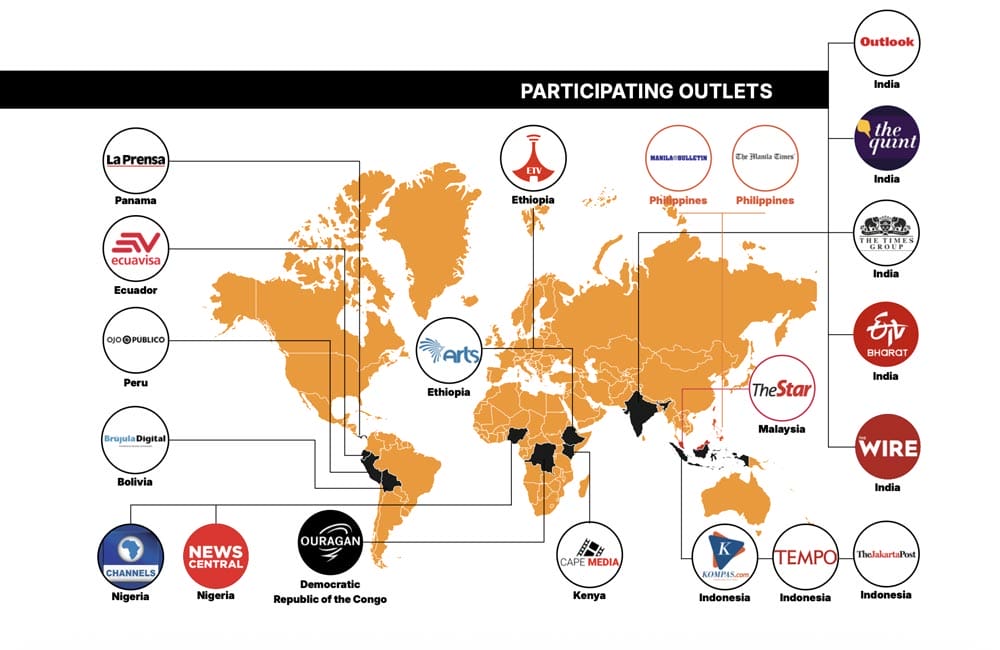
With support from the Rockefeller Foundation, CCNow partnered with Agence France-Presse to give 21 news outlets in the Global South free access to AFP’s climate and energy news feed. These outlets reach more than 457 million people. Over 12 months, they ran 2,875 stories on the climate crisis and its solutions.
On average, each outlet ran 137 extra climate stories — roughly one every three days. The most popular topics included UN climate negotiations, extreme weather, pollution’s impact on public health, and green tech.
Reaching Audiences Where They Are
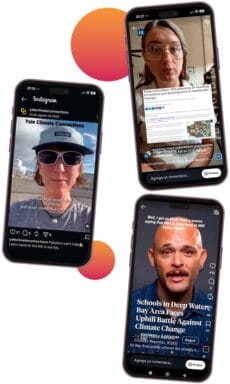 Over 30 journalists from the US, Canada, Europe, and Africa joined our first social media workshop. They learned to sharpen their posts, build a following, and produce compelling climate videos — at the very time when social media is overtaking TV and news sites as the top news source in the US.
Participants called the workshop “engaging and informative” and said they felt “more confident” sharing climate stories online. Kala Hunter of Georgia’s Columbus Ledger-Enquirer used what she learned to create an Instagram reel, which hit 286,000 views in less than two weeks — a big jump from her previous average of just a handful of views.
The energy didn’t stop when the sessions ended. Graduates kept sharing tips in a dedicated channel in CCNow’s community Slack, and many of them asked for homework to practice their new skills. As they applied what they learned, participants began producing stronger, more engaging social content — demonstrating how these skills can directly increase the visibility and impact of climate reporting.
Learn more about the Climate Social Media Lab.
Support Covering Climate Now
Our work is made possible by the generous support from donors like you.
Donors
Thank you to our funders, including the Al Ortiz Green South Foundation, the MacArthur Foundation, the Minerva Foundation, the Park Foundation, the Rockefeller Foundation, the Waverly Street Foundation, Wayne Crookes, and the Woka Foundation, and individual donors like you.