Covering Climate Now is proud to announce the winners of the 2026 CCNow Journalism Awards. Our awards program, now in its sixth year, honors excellent reporting on many critical dimensions of the climate story. The winners hail from around the world, from outlets big and small, and, together, their work represents a model for journalists everywhere working to tell the biggest story of our time.
CCNow received more than 1,200 entries, from journalists in dozens of countries. A judging panel of 120 distinguished journalists from more than 30 countries and territories, many of whom are past winners and finalists of these awards themselves, selected the winners.
Judges named up to three winners in each of 14 subject-based categories — for example, Solutions, Justice, and Health. Judges additionally awarded three Journalists of the Year, three Emerging Journalists of the Year, and three entries in a Large Projects & Collaborations category. And CCNow issued our second-ever Lifetime Achievement award.
Thank you to all the entrants! And thanks to our stellar judges for their hard work and dedication. This year’s awards were additionally made possible with generous support from the Michaux Family Foundation and the Yale Program on Climate Change Communication.
CLICK ON A CATEGORY OR SCROLL DOWN TO SEE ALL THE WINNERS
2026 Lifetime Achievement Award
- Solutions
- Justice
- Fossil Fuels
- Extreme Weather and Its Impacts
- Politics, Policy & Climate Action
- Disinformation
- Business & Economics
- International Relations, Including COP30
- Conflict & Climate Change
- Displacement & Migration
- Forests, Oceans & the Natural World
- Health
- Food & Agriculture
- Climate in Every Beat
- Large Projects & Collaborations
- 2026 Emerging Journalists of the Year

This special award is given to three journalists who demonstrate exemplary commitment to the climate story. Previous winners of the award are Tristan Ahtone, Thaslima Begum, Manka Behl, Damian Carrington, Audrey Cerdan, Vanessa Hauc, Ayoola Kassim, Rachel Ramirez, Amy Westervelt, and Justin Worland.
In memory of Ginny Michaux, this category is made possible by the Michaux Family Foundation, which supported the creation of CCNow’s awards program in 2021.

Kim Min-wook
CLIMATE REPORTER & FILMMAKER, MBC NEWS (SOUTH KOREA)
Watch some of Kim’s winning stories here, here, here, and here.
On New Year’s Day 2025, MBC News — among South Korea’s largest broadcasters — aired an hourlong documentary about a class that many teens across Asia are taking but none signed up for. In “Zero Period: Climate Crisis,” MBC correspondent and filmmaker Kim Min-wook documents how young people are learning to live in environments irrevocably altered in the era of climate change: Nisha in Nepal, who was cut off from her school by a landslide; Masuma in Bangladesh, who every day packs a spare uniform, expecting flooding to ruin his clothes on the way to school; and Sukhbaatar in Mongolia, who was sent to boarding school after extreme cold drove his nomadic family off their land. On its own, “Zero Period” is an ambitious, inventive and tremendously successful piece, and yet it represents only a fraction of Kim’s standard-setting body of work from 2025. In many similarly innovative and deeply reported broadcasts, Kim and his team at MBC News explore, for example, deep-seated issues within South Korea’s forestry policies amid escalating wildfire damage; melting glaciers around the globe and how those connect to issues of climate justice; and how climate fears are reshaping South Koreans’ considerations at the ballot box. The range Kim demonstrates in these reports is singular and striking, judges said, and the fresh angles he pursues reveal a rare commitment to connecting with audiences and driving attention to the story of our time.
Kim is also a winner in this year’s Politics, Policy & Climate Action category.
Roli Srivastava
FOUNDER & EDITOR, THE MIGRATION STORY (INDIA)
Read some of Srivastava’s winning stories here, here, and here; and check out all The Migration Story’s coverage here.
Roli Srivastava is a Mumbai-based climate journalist reporting on the just transition, gender, migration, and inclusive economies, focusing mainly on India’s marginalized communities. In 2024, she founded The Migration Story, which reports on India’s immense migrant labor force through the lens of climate change. The climate story benefits enormously from upstart publications staking out territory like this, which legacy publications often pass over, and The Migration Story distinguishes itself with a blend of compassion and public service. In 2025, Srivastava reported on women reviving traditional cultural organizations to spread awareness and stop forest fires; on one village’s groundwater and conservation revolution; and on the mix of fascination and reticence young Indians are showing towards acquiring green job skills. To widen The Migration Story’s reach, Srivastava has forged co-publishing relationships with the likes of The Guardian, Germany’s Clean Energy Wire, and India’s popular Frontline magazine. Srivastava speaks widely on the climate crisis to research and government organizations, universities, and media networks. She additionally conducts routine training workshops for journalists across India, focused on climate change and solutions reporting.
Srivastava was a winner in 2025, in our Solutions category. The Migration Story is also honored in this year’s Justice category.
Sammy Roth
FOUNDER, CLIMATE-COLORED GOGGLES
Read some of Roth’s winning stories here, here, and here; and check out Climate-Colored Goggles here.
To climate journalists in the US at least, Sammy Roth requires little introduction. Following his pioneering tenure as a climate reporter and columnist at the Los Angeles Times, and before that at the Desert Sun, Roth set out on his own in 2025 to found Climate-Colored Goggles, a newsletter taking a unique culture-centric approach to the climate story. As Roth explains in an introductory post, humanity has the solutions it needs to fight climate change, “But we’ll never muster sufficient political will until our cultural consciousness shifts. That’s a job for the storytellers who shape how we see the world: the industries that bring us movies, TV, sports, social media, newspapers, food, music, advertising, video games, theme parks, art. They’re all affected by the climate crisis. … [And] they’re our best chance at moving the needle, fast.” The decision to leave legacy media and go independent is increasingly common for reporters on the climate beat, and just as he did at the LA Times, Roth shows how it’s done. The stories Roth pursues are imaginative, and the deft touch of personal narrative he brings to much of his work ensures they resonate. As world-renowned scientist and climate communicator Katharine Hayhoe said recently, “Sammy’s work makes clear that climate action doesn’t belong only in big marches or scientific reports. It lives in stadiums, storylines, songs, and shared moments.”
Roth was a winner in 2025, in our Solutions category, and in 2022.

This special award, now in its second year, is presented to one journalist whose work has had a longstanding and transformative impact on our profession. Last year’s recipient was Bill McKibben.
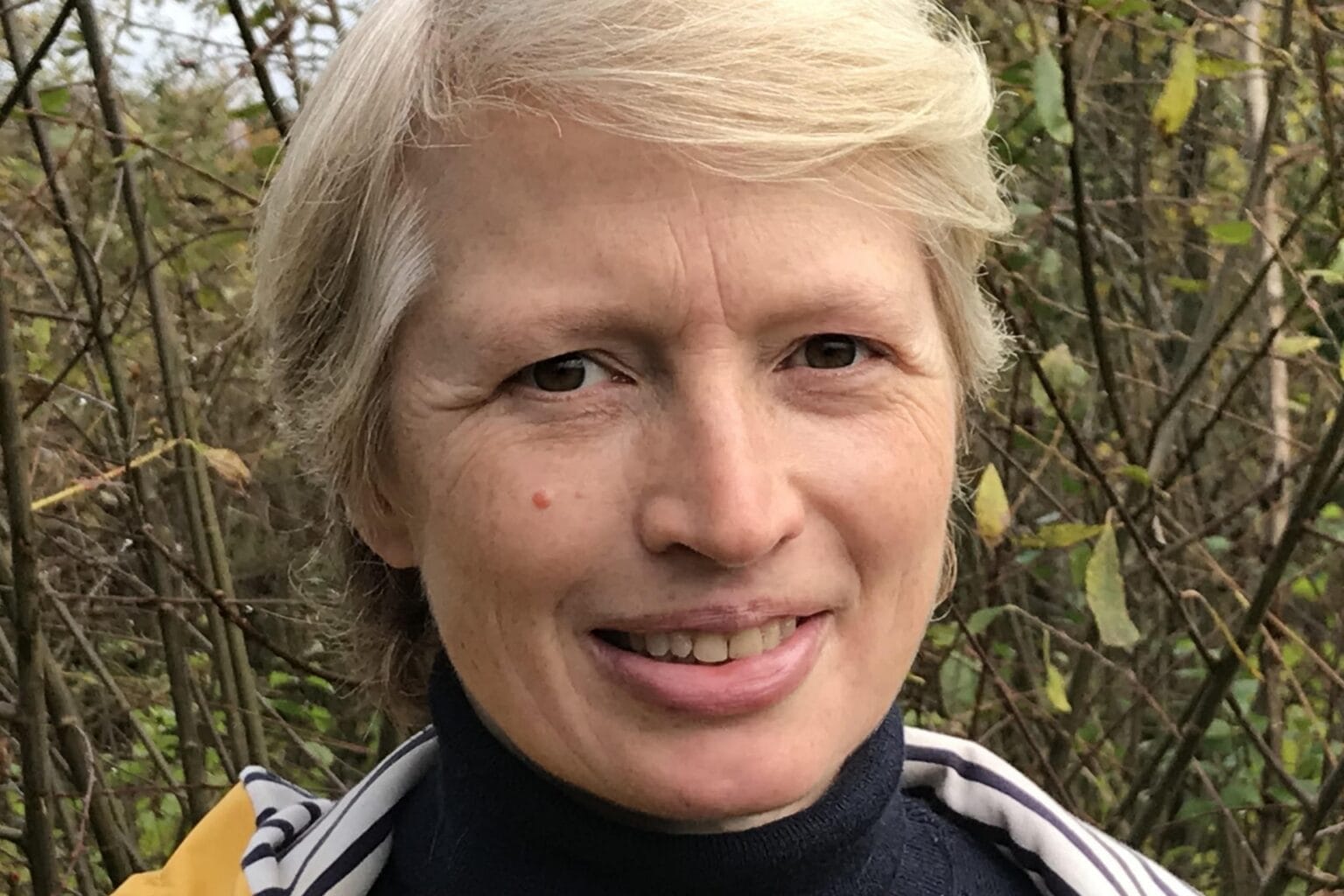
Fiona Harvey
ENVIRONMENT EDITOR, THE GUARDIAN
Follow all of Harvey’s coverage at The Guardian here.
For 15 years at The Guardian, and earlier at the Financial Times, Fiona Harvey has told the climate story with exceptional rigor, panache, and impact, while never losing sight that it is fundamentally about people and the momentous choices shaping the future that we will all inhabit. “When people ask me what I do, I say I write about the end of the world,” Harvey said in a 2022 Guardian documentary. “But of course what I’m really writing about is how we avoid the end of the world.”
Harvey’s body of work displays remarkable range, from investigative exposes of financial malfeasance and explainers of cutting-edge science to breaking news and high-profile interviews. She has often been years ahead of the pack, illuminating a path for others to follow. Her graceful prose is accessible to general readers, even as it is closely read by climate insiders, giving her significant influence on how both the public at large and leaders think and talk about climate change.
By 2005, Harvey and her Financial Times colleagues had already stopped platforming climate deniers in the name of telling “both sides” of the story. Having come to the environment beat after years as a science reporter, Harvey prioritized peer-reviewed studies, not industry propagandists. Most climate reporting in the US gave equal credence to skeptics, she said in a 2006 interview with Vanity Fair. “We don’t do that here, not because we’re not balanced but because we think it’s unbalanced to give equal validity to a fringe few with no science behind them.”
Over time, Harvey has perhaps become best known as the definitive chronicler of COPs, the annual UN summits where world leaders discuss how to honor their commitment at the 1992 Earth Summit to prevent dangerous levels of global warming. To cover COPs well requires robust background knowledge, deep sourcing, sound judgment, and, not least, sheer stamina. Harvey has covered 19 of them.
As the public’s witness to these elite proceedings, Harvey gives officials plenty of opportunity to explain themselves but never at the expense of the truth. Her Guardian profile of Sultan Al Jaber — who presided over COP28 while serving as chief of the oil and gas company of the host country, the United Arab Emirates — is a master class in fair-minded accountability reporting. Harvey quotes Al Jaber at length making the case that oil companies should be accepted as good-faith partners in the climate fight. Then, she poses the decisive question: Does Al Jaber intend to put his own company out of business? Flustered, he replies, “Why would I want to do that?” Because, Harvey writes, science allows only three possibilities: either oil and gas companies “refocus themselves on renewable energy, or go out of business. Or we will fry.” (Harvey’s profile of Al Jaber was a winner in these awards in 2024.)
When the Financial Times made the environment a full-time beat in 2004, Harvey applied immediately. “As a journalist,” she told CCNow, “I could see that it was a story that had everything: politics, science, business, new discoveries, controversy, and of course the entire future of the only planet we can live on. … I thought it must be the best job in the world. And I still think that.”

Science is unequivocal that solutions are urgently needed to confront the climate crisis — and audiences are hungry to learn about them. Great journalism doesn’t just explain potential solutions, it interrogates them: Do they achieve what they promise, do they measure up to what science demands, and are they just? While solutions are mentioned in many climate stories, in this category, judges considered work featuring one or more solutions as its primary subject.
 This category is made possible by the Yale Program on Climate Change Communication. YPCCC conducts scientific studies on public opinion and behavior and educates the public about climate change. Journalists can find the program’s signature Yale Climate Opinion Maps, in addition to other timely reports and research, here.
For Climate and Livelihoods, Africa Bets Big on Solar Mini-Grids
KNOWABLE MAGAZINE | WRITING
Victoria Uwemedimo & Katarina Zimmer
Read the winning story here.
Some 600 million people in Africa lack reliable access to electricity. But now, on the world’s sunniest continent, solar power — specifically solar mini-grids — could be poised to change that. Reporting from the palm forests of southeastern Nigeria, Victoria Uwemedimo and Katarina Zimmer illustrate how small, community-specific assemblages of solar panels, batteries, and transmission lines have transformed the villages of Mbiabet Esieyere and Mbiabet Udouba. The differences shine in the examples of a young barber, who lowered both his costs and his prices after kicking to the curb his pricey diesel generator, and of a cassava farmer, for whom more efficient food processing has meant a nearly fivefold increase in her weekly earnings. Uwemedimo and Zimmer take care, though, not to oversell the promise of mini-grids, also detailing barriers to scaling, such as stiff import tariffs on panels and sky-high interest rates for countries and utilities that are already strapped for resources. Nonetheless, in Mbiabet Esieyere and Mbiabet Udouba, the future appears bright. Uwemedimo’s and Zimmer’s “strong on-the-ground reporting and memorable characters,” judges said, combine for a persuasive case-in-point of the potential for renewable power to improve rural lives and livelihoods.
Leave It to Beavers
BIG PICTURE SCIENCE | AUDIO
Molly Bentley, Gary Niederhoff, Shannon Geary, Brian Edwards & Nsikan Akpan
Listen to the winning story here.
Consider the North American beaver: paddle-tailed, tree-gnawing, and, as we learn here from the independent radio show and podcast Big Picture Science, perhaps our fuzziest climate hero. Little more than a century ago, the fur trade had driven beavers nearly extinct; now, engineers and conservationists are reintroducing the critters to habitats across the US in a bid to preserve under-threat wetlands. Indeed, at a time when many of America’s wetlands are disappearing — the result of climate change–fueled storms and droughts, as well as stripped federal protections — beavers’ dam-building turns trickling streams and mud-cracked marshes into vibrant freshwater habitats that, among many benefits, store carbon, support biodiversity, and defend against droughts and wildfires. Traipsing across sodden landscapes, executive producer and host Molly Bentley keeps the ecology fun and accessible to a wide audience. Immersive soundscapes, spot-on expert interviews, and no shortage of colorful beaver facts, judges said, make for an altogether charming listen.
Refreezing the Arctic
SCIENTIFIC AMERICAN | WRITING
Alec Luhn with Taylor Roades
Read the winning story here.
In a warming Arctic, scientists predict that within the coming two decades, in the summer, the polar ice cap will melt away entirely — a dire tipping point in the climate crisis, because, whereas white snow and ice reflect a majority of the sun’s heat back into space, darker ocean waters absorb it. Reporter Alec Luhn journeys to Canada’s far-northern Cambridge Bay, with a UK-based company on a novel mission to make ice by drilling through existing sea ice and pumping up water that then freezes on the surface. Is it salvation or folly? Luhn refrains from nudging readers too far in any direction. He engages Real Ice on its own terms and watches the team at work. He then weighs the company’s relative confidence against a host of unknowns: how the drilling and pumping will affect animal life both above and below the ice, what it portends for Inuit hunting and livelihoods, and, even more fundamentally, how exactly sea ice forms in the first place. Luhn devotes space, too, to Inuit leaders, who see a form of colonialism in the guise of “climate solutions,” and critics who fear that geoengineering like this is a distraction from the harder work of decarbonization. Judges praised Luhn’s thorough reporting and deft balancing of the many perspectives at hand. Vivid descriptions and smart historical framing further elevate the work.
Luhn was a winner in 2023.

Climate change often hits first and hardest marginalized countries and communities that have contributed the least to the problem. While justice is mentioned in many climate stories, in this category, judges considered work featuring a justice angle as its primary subject — among them: peril and hope on the frontlines of the climate crisis, unexpected intersections of climate change with other systems of injustice, and marginalized groups pioneering solutions to show the world a path forward.
Inside the Indonesian Boomtowns Powering the World’s Electric Vehicles
GRIST | WRITING
Wufei Yu
Read the winning story here.
A huge portion of the refined nickel used in long-range and performance electric vehicle batteries is smelted by Chinese migrant workers on remote Indonesian islands. The pay is triple what these workers might earn at home, but opportunity comes at a steep cost. For Grist, reporter Wufei Yu takes readers inside this hidden yet sprawling corner of the clean-energy economy. In the furnaces of Sulawesi and North Maluku, Yu documents long and sweltering shifts, confiscated passports, and heavy restrictions on workers’ freedom of movement. Burns and respiratory ailments are common, and, in late 2023, an explosion in one factory killed 21 people. In villages beyond the plant walls, meanwhile, Yu reports fouled water, spreading prevalence of dry cough, and a rapid rise in children with signs of stunted growth. Yu’s story unfolds in compelling detail, with sensitive source interviews and impressive document work. In sum, judges said, it’s a “profound” and devastating inversion of tidy going-green narratives.
The Eaton Fire’s Impact on Black Families
CAPITAL B | WRITING
Adam Mahoney
Read the winning stories here, here, here, and here.
Altadena, in the hills northeast of downtown Los Angeles, became a rare bastion of Black homeownership, after scores of families who fled the Jim Crow South settled there in the 1960s and 70s. In January 2025, though, generations of stability and wealth burned in the Eaton Fire. For Capital B, Adam Mahoney documents what came next: dizzying rent hikes, meager aid and insurance payouts, insurance claims that were rejected outright, and families forced to drain retirement savings to stave off foreclosure. And there’s the troubling pattern of “disaster gentrification,” in which outside, often corporate, buyers move in and price out longtime residents. Centered on warmly drawn family portraits, Mahoney’s stories expose how climate change, housing policy, and structural racism converge to weaken Black strongholds — and ask whether governments will act before future disasters make matters worse. Award judges called Mahoney’s reporting “straightforwardly beautiful, evocative, and important.” It has since been cited in National Institutes of Health–funded research and lawsuits against Los Angeles County and Southern California Edison.
Mahoney was a winner in 2024, as one of three Emerging Journalists of the Year.
Beneath the Panel: The Hidden Losses of India’s Solar Parks
THE MIGRATION STORY (INDIA) | VIDEO
Aparna Ganesan with Jai, Jeeva, Dinesh Raja, Siva, Sachin Bharathvaj, R Mugesh & Roli Srivastava
Watch the winning story here.
India’s solar boom, an anchor of the government’s much-touted “Sunrise Sector,” is often framed optimistically, as a story about job growth and economic progress. This essential documentary, helmed by Aparna Ganesan, tells the story from the other side of a solar park fence. A decade ago, in rural Tamil Nadu, farmers and pastoralists gave up some 4,000 acres to make way for what would become among the world’s largest solar parks. Ganesan and her team return to find the same communities cut off from their former livelihoods, now struggling to survive. Building on seven months of reporting and more than 50 interviews, the story raises urgent questions about equity and community consent amid the world’s quest for clean energy. Judges called it an “ambitious undertaking that truly delivers,” adding that it handles challenging subjects like forced displacement “with great sensitivity and beauty.”

Journalism investigating the power and machinations of the fossil fuel industry remains as critical as ever. Here, judges considered work covering new fossil fuel development, greenwashing, government lobbying, and dubious schemes to offset emissions, among other topics focused on the industry.
Life at 50 Degrees Celsius: Exposing the Toxic Record of Colombia’s Oil Giant
BBC WORLD SERVICE | VIDEO
Owen Pinnell, Christian Escobarmora, Monica Garnsey & Heather Sharp
Watch the winning story here.
Colombia is among the most dangerous countries in the world to be an environmental defender, which makes the robust sourcing in this BBC World Service investigation into the state oil company Ecopetrol all the more impressive. Following a former Ecopetrol employee’s leak of internal records that catalogued more than 800 oil spills between 1989 and 2018 — and with further data showing hundreds of more spills since — the BBC team sets out to ascertain the extent of the damage. A fishing union leader reports, for example, that Ecopetrol’s pollution has killed wildlife in the vicinity of the Magdalena River, which also serves as a water source for millions of people. A community leader says she was held at gunpoint after taking part in anti-fracking protests. And the former Ecopetrol employee, like scientists who also appear in the story, is shown to have fled into exile due to death threats that followed his leak. (It’s not suggested that Ecopetrol orders violent threats or actions, but after decades of armed conflict in the country, there’s significant overlap between former paramilitary groups and the private security sector; in 2018 alone, Ecopetrol paid $65 million to more than 2,800 private security outfits, whose incentive, one expert explains, is to protect Ecopetrol’s operations.) Judges cheered the BBC’s combination of “deeply human” community reporting with hard-hitting, yet fair-minded, interviews with the likes of a former Ecopetrol CEO. “This documentary has it all and does everything right,” they said.
Why Brazilian Towns Awash With Royalties From Oil Are Still Among the Poorest
AGÊNCIA PÚBLICA (BRAZIL) with THE GUARDIAN | WRITING
Rafael Oliveira with Giovana Girardi, José Cícero, Bianca Muniz, Matheus Pigozzi, Bruno Fonseca & Magno Borges
Read the winning stories here and here.
Why, in Brazilian towns whose public coffers brim with billions from oil exploration royalties, can everyday citizens not see a doctor or ensure a decent education for their children? This apparent contradiction drives this two-part investigation by Rafael Oliveira and colleagues at Agência Pública which finds that nine of the 15 Brazilian municipalities that have reaped the most from oil have more than a quarter of their populations living below the poverty line. Several tout luxuries like samba stadiums and theme parks, while at the same time they rank near the bottom in their respective states for quality-of-life indicators, such as basic sanitation, employment, and health. Pairing rigorous data analysis with boots-on-the-ground reporting, the Pública team, judges said, convincingly dismantles the myth that accompanies so many fossil fuel development pitches: that the wealth will trickle down. The investigation was later cited by Brazil’s Ministry of Environment and Climate Change and sparked debate in the National Congress.
Oliveira was a winner in 2025, in our Solutions category, and in 2024, in our Politics, Policy & Climate Action category.
Romania’s Coal-Powered Energy Giant May Have Underdeclared Emissions — and Saved Hundreds of Millions
THE ORGANIZED CRIME AND CORRUPTION REPORTING PROJECT & THE RISE PROJECT (ROMANIA) | WRITING
Leopold Salzenstein, Eli Moskowitz, Andrei Ciurcanu & Roxana Jipa
Read the winning story here.
A lung doctor in Turceni, in southwestern Romania, says her family prays the wind won’t blow, because, when it does, thick fly ash from the nearby coal plant settles over everything, even the food; in this town, residents are allowed to retire two years early, as compensation for the plant’s pollution. For eight years, on paper, the plant has appeared to be among Europe’s cleanest. In this rigorous collaborative investigation, reporters Leopold Salzenstein, Eli Moskowitz, Andrei Ciurcanu, and Roxana Jipa reveal that state-run Complexul Energetic Oltenia enormously underreported emissions from three of its coal plants. (Oltenia’s own laboratory had been measuring the emissions.) The underreporting may have saved Oltenia over €250 million in EU carbon taxes, even as Brussels sent the company hundreds of millions in aid to help it quit coal. Judges called this story “necessary” and “impressive,” hailing its attention-grabbing lead, accessible technical descriptions, and persuasive methodology.

Stories in this category made clear the connection between weather disasters and human-caused climate change. Strong explanations of how climate factors into extreme weather — hurricanes, floods, wildfires, extreme heat and cold, and more — as well as human-centered stories of disasters and their aftermath told with a climate lens, can help inform the public about the bigger picture.
Floods of Trouble
MIAMI HERALD | WRITING
Alex Harris & Susan Merriam
Read the winning investigation here and here.
At a time when flooding constitutes a multi-billion-dollar threat — exacerbated by climate change and sea-level rise — where it’s flooding, how much, and how often are critical. Yet powerful interests keep this data, when it exists in the first place, largely under wraps. So, when federal flood data for South Florida proved impossible to access, Miami Herald reporters Alex Harris and Susan Merriam set out to build their own dataset. Compiling more than 16,000 public-record flood complaints, filed across 11 years in Miami-Dade and Broward counties, they discovered that flooding repeatedly takes place well outside of the Federal Emergency Management Agency’s officially designated “high-risk” flood zones — leaving homeowners, prospective home buyers, and planners aiming to bolster flood resilience all blind to the region’s actual risk. The Herald’s sustained reporting directly led to the passage of state law requiring sellers to disclose a property’s flood history, equipping Floridians with information essential to protecting their homes, savings, and futures. Our judges applauded Harris and Merriam for refusing to take FEMA’s flood maps at face value, calling this “the gold standard for public-service investigative journalism.”
Harris was a finalist in 2021.
The Storm
TAGES-ANZEIGER’S DAS MAGAZIN (SWITZERLAND) | WRITING
Jonah Goodman with Maurice Haas, Sebastian Broschinski, Francisco Martinez Ruiz & Céline Stettler
Read the winning feature here, here, and here.
In June 2024, high in the Swiss Alps, hundreds gathered for a beloved soccer tournament. As night fell, a party began — but so did a fierce thunderstorm. People took shelter under a tent, but hours passed and the deluge continued. It was after midnight when rockfalls began crashing down in the dark around them. Then, the ground beneath the tent began to give way. Published as an entire issue of Das Magazin, the weekly supplement to the daily newspaper Tages-Anzeiger, this vivid reconstruction of deadly flooding in the Maggia Valley shows how symptoms of climate change — late snowfall, a hot Mediterranean Sea, a freak storm, and a booming bark beetle population — coalesced into a disaster that no person or weather system could predict. Reporter Jonah Goodman’s work is “a masterclass in climate journalism,” judges said. “Intellectually rigorous and emotionally engaging,” Goodman delivers not only a terrifying account of one storm, they said, but fundamentally challenges how we think about weather preparedness in this new era of climate extremes.
Where Land Disappears
ASIAN DISPATCH (INDIA) | MULTIMEDIA
Usraat Fahmidah with Rifat Anik
View the winning story here and watch its corresponding documentary here.
Every few seasons, the women of Banishanta — a narrow river island in southern Bangladesh that counts among the country’s few registered brothels — are forced by rising waters to dismantle their homes and rebuild further inland. Women on the island have long grappled with social and physical isolation. But now, as the lapping river takes increasing hold of their fates, a downward spiral has been set in motion of mounting debt, dwindling clientele, and fast-deteriorating mental health. As reporter Usraat Fahmidah reveals here in heart-rending detail, with nowhere else to go and policymakers absent, the women and their children are left on their own fighting worsening storms and floods. “This is courageous, boundary-pushing work,” judges said. “It insists that climate damage isn’t just physical or economic but psychological, generational, and deeply human.”

In this category, judges considered work covering government action and inaction; policies that hold promise and ones that don’t promise enough; and the leaders who’ve fought to deliver solutions, as well as those who’ve thwarted them. Also pertinent to this category: elections, the global democracy crisis, and the roles of diverse government agencies.
Alaska for Sale
GRIST & NAUTILUS | WRITING
Lois Parshley
View the winning stories here, here, here, and here.
Reporter Lois Parshley documents how federal policies and regulatory rollbacks in Alaska are undermining tribal sovereignty and rewriting national energy and conservation precedents. When the administration opened the Arctic National Wildlife Refuge to drilling, for example, Parshley spoke with a Gwich’in leader about how a caribou calving ground that’s sacred to the community became ground zero for Trump’s fossil fuel–based “energy dominance” agenda. She explores congressional Republicans’ use of an obscure loophole to scratch land protections for a swath of northwestern tundra by deeming those protections “federal overreach.” And she reveals the secretive deals behind a prospective natural gas pipeline that would bisect the state, with hundreds of millions already spent despite the pipeline being highly speculative. Pairing immersive on-the-ground reporting with rigorous financial and regulatory analysis, Parshley “seamlessly turns Alaska stories into national stories and vice versa,” judges said. Her explanations of complex policy are skillful and efficient, while sharp prose and colorful quotes keep the reader hooked.
Parshley was a winner in 2024, in our Business & Economics category.
The Seed Syndicate
AFRICA UNCENSORED (KENYA) | VIDEO
Cynthia Gichiri with Sam Munia, John Gathuna, Samson Njuru & Kevin Mbugua
Watch the winning story here.
Saving, swapping, and selling seeds was an age-old way of life for Kenyan farmers. Then, in 2012, a controversial law made much of it illegal. In this two-part documentary, reporter Cynthia Gichiri traces how the law came into existence and whose interests it served, as indigenous seed varieties gave way to engineered, commercial ones. Following a trail from farmers’ fields to government ministries and international corporate boardrooms, Gichiri demonstrates how profit-seeking companies forced small Kenyan farmers into high-pressure financial obligations that have devastated aspects of rural life. Along the way, she details what’s at stake in a changing climate, including, perhaps most of all, rural communities’ food sovereignty, with indigenous seeds not only yielding more nutritious crops but proving more resilient amid weather extremes. “Beautifully shot,” judges said, this is emotionally engaging work that’s as essential as its content can be “enraging.” One judge said simply, “I give this my highest praise, which is that it moved me.” In November 2025, a Kenyan court struck down key parts of the law.
Dams: To Build or to Breach?
MBC NEWS (SOUTH KOREA) | VIDEO
Kim Min-wook & Cha Hyun-jin with Park Ju-young, Kim Jun-hyung & Jeon In-je
Watch the winning story here.
Facing worsening floods and droughts, South Korea’s government proposed constructing 14 “Climate Response Dams.” In this multi-part series, reporters Kim Min-wook and Cha Hyun-jin responded with a pointed inquiry: Is more carbon-intensive concrete really the answer to climate woes? They found that the government’s own monitoring had concluded the country’s water management was sufficient without the new dams — and that the reservoirs held behind such dams can become sources of the potent greenhouse gas methane. To weigh alternatives, the MBC News team traveled to the Klamath River in the western US and the Kumo River in southern Japan, where the rivers run free after community activists successfully advocated for dams to be removed. They find, in the end, that restoring natural ecosystems might prove the more effective and sustainable path towards climate resilience. “This series has it all,” judges said, applauding the team’s deep reporting and insightful international comparisons. The impact of Kim’s and Cha’s reporting was swift and significant, with the government significantly scaling back its construction plans and announcing a re-examination of dam projects nationwide.
Kim is also one of this year’s three Journalists of the Year.

Despite wider awareness than ever of the climate crisis, disinformation thrived in 2025. This category was for work that helps audiences parse truth from falsehood — work that debunks denial and delay, greenwashing, conspiracy theories, and more, while calling out the powerful interests responsible and the means by which disinformation spreads.
Carbon Bros
DRILLED & NON-TOXIC | AUDIO
Daniel Penny & Amy Westervelt with Martin Austwick
Listen to the winning series here.
In the so-called “manosphere,” the pitch is one of wealth, power, and grievance. But woven between those mainstay topics is an unmistakable thread of climate denial. As co-hosts Daniel Penny and Amy Westervelt explain in this four-part podcast series, that’s no accident: The fossil fuel industry figured out decades ago that some groups of men are more susceptible than the broader public to climate disinformation. Penny and Westervelt detail how the industry’s messaging took firm root in this space, how that has shaped men’s views of the climate crisis, and how those views show up at the ballot box. With “sharp analysis, snappy editing, and interesting characters,” judges said, Carbon Bros “smartly illustrates how contemporary political and sociological shifts are inseparable from the climate conversation.” The hosts’ senses of humor sweeten the deal, they added, making this series “exactly what the climate beat needed.”
Westervelt was a winner in 2023, as one of three Journalists of the Year, and in 2021.
The Man Behind the Fall of Offshore Wind
CANARY MEDIA | WRITING
Clare Fieseler with Greg Kahn
Read the winning story here.
The man who, as Clare Fieseler reports, has done more than virtually anyone to stall the progress of offshore wind perhaps paradoxically considers himself a lifelong conservationist. He drives a hybrid car, and the roof of his home is outfitted with solar panels that he custom-designed for maximum efficiency. So what drives David Stevenson, a Delaware think-tank operative, to knowingly amplify false information, such as the debunked but widely believed claim that windmills kill whales? That’s the question behind this highly readable profile, which is animated by access to Stevenson that Fieseler developed over three years. “Fresh and timely,” judges said, the piece thoughtfully examines how a disinformation narrative propagates from local circles to national policy. (Trump’s second administration has taken aggressive action against wind energy.) Fieseler shines absorbing light on a critical trend in climate disinformation, which is not to deny climate change outright — Stevenson himself believes in climate change, he says in the piece — but to sabotage specific solutions.
How Brazil’s Oil Giant Is Using Gen-Z Science and Climate Influencers to Green up Its Image
AGÊNCIA PÚBLICA (BRAZIL) & DESMOG | WRITING
Juliana Aguilera
Read the winning stories here and here.
Ahead of COP30 in Belém, Brazil, the country’s state-owned oil company, Petrobras, had a public relations problem. As COP host, Brazil would be expected to shepherd global commitments to transition away from fossil fuels — so what would Petrobras have to say for itself, with active plans to expand its oil and gas operations, including by drilling in the very region where the climate summit would take place? Reporter Juliana Aguilera details how Petrobras hired a “squad” of seven well-known Gen Z science and climate influencers, who agreed to leverage credibility with their combined 3-million-some followers to help green up the company’s image. Aguilera calls on an impressive variety of sources, including influencers who took part in Petrobras’s scheme and influencers who refused to, plus scientists, journalists, and the company itself. “Lively and compelling,” judges said, the story depicts an agile fossil fuel giant whose messaging tactics are adapting, at a critical moment in the climate crisis, to reach young people and shape public opinion.

In the race towards a clean energy economy, what businesses are thriving, and which are faltering? What policies and banks are helping spur the transition, and who’s doubling down on fossil fuels? And critically, amid such rapid change, who’s gaining work and who’s losing it? This category was for all things related to business and economics, from the financial burden of climate disasters to the opportunities of climate action.
The Strange and Totally Real Plan to Blot Out the Sun and Reverse Global Warming
POLITICO MAGAZINE | WRITING
Karl Mathiesen & Corbin Hiar with Laurens Cerulus, Reto Albertalli, Amit Elkayam & Nicolás Ortega
Read the winning story here.
Scientists have rejected ideas of reflecting sunlight to cool the planet as too risky to even study, better left to the domain of post-apocalyptic fiction. But now, with global temperatures consistently hitting new highs and insufficient large-scale efforts to stop climate change, some entrepreneurs are eyeing planet-cooling tech as a worthy last-ditch option — and a great way to make a buck. In what one judge described as a “non-fiction Dr. Strangelove,” reporters Karl Mathiesen and Corbin Hiar tell the story of the two-year-old startup Stardust Solutions, which has raised $75 million for its plan to spray reflective particles into the stratosphere within a decade. Drawing on public records, confidential documents, and more than three dozen interviews, Mathiesen and Hiar dig into the company’s quiet Washington lobbying and the venture capital placing bets on technology whose risks no one fully understands. Even before the story ran, it drew blood, forcing Stardust to publicly declare its fundraising haul and acknowledge payments to a US lobbying firm it made without filing requisite disclosures. After publication, the story was cited in the British legislature and prompted an inquiry from the European Parliament. It’s a “grand swing” that hits its mark, judges said, with bracing, even funny prose that manages to be both skewering and entirely fair in the face of a subject that is, as judges put it, “at once absurd and deadly serious.”
Mathiesen was a winner in 2024, in our Politics, Policy & Climate Action category, and a finalist in 2022.
From Asbestos to Rare Earths, Brazilian City Lives Between the Past and Future of Mining
AGÊNCIA PÚBLICA (BRAZIL) | WRITING
Isabel Seta
View the winning story here.
Minaçu, a city of 27,000 people in the central Brazilian state of Goiás, was built on asbestos mining, until a 2017 Supreme Court ruling banned the substance and set the asbestos mine on a path of decline. Now, Minaçu fortunes are tied to a new form of extraction: the only mine outside of Asia that produces all four of the magnetic rare earths used in electric vehicle and wind turbine manufacturing. This isn’t quite a comeback, however, as reporter Isabel Seta reveals in this story the hidden costs of climate change mitigation, in which new extractive models threaten to sustain, if not deepen, existing inequality and environmental harm. Even at asbestos’s peak, mining had failed to lift a third of Minaçu’s population out of poverty — today, with rare earths, there are few signs residents will fare better. Then there are the reports of the new mining projects fouling local waters. Judges praised Seta’s industrious combination of data and field reporting, as well as her “elegant” braiding of economic, environmental, and justice themes. The “highly relatable human framing” Seta applies to her narrative elevates the story’s impact.

In this category, judges considered work about how climate change is reshaping diplomacy worldwide and how countries are working together, or not, to fight climate change, including at the 2025 UN climate summit in Brazil. How is climate change pushing countries apart or bringing them closer together? And what stands in the way of countries making good on global climate commitments?
African Voices, Women of Faith, and Frontline Communities at COP30
GLOBAL SISTERS REPORT | WRITING
Doreen Ajiambo
Read the winning stories here, here, and here.
“Loss and damage” — which refers to irreversible consequences of climate change and how the smallest and most vulnerable countries should be compensated for those impacts by the wealthy countries that are most responsible for climate change — was a major subject at hand in Belém. In stories for Global Sisters Report, a project of the National Catholic Reporter, Doreen Ajiambo centers the COP narrative on women in frontline communities who know those losses firsthand and are demanding representation and equity in global negotiations. Ajiambo surveys three decades of COP summits, showing the widening gap between promises and action. And she introduces us to faith leaders who are challenging governments on their continued support for fossil fuels, framing climate inaction as a moral failure. Judges applauded Ajiambo for bringing underrepresented perspectives into the climate diplomacy discourse; whereas COP coverage often leans technical and bureaucratic, they added, “this is a compassionate and morally forceful package” that imbues the proceedings with the weight and meaning they deserve.
Ajiambo was a winner in 2025, in this category.
Revealed: Leak Casts Doubt on COP30’s ‘Informal List’ of Fossil-Fuel Roadmap Opponents
CARBON BRIEF (UK) | WRITING
Leo Hickman & Simon Evans
Read the winning story here.
When countries failed at COP30 to agree on a “roadmap” away from fossil fuels, the summit’s Brazilian hosts explained that countries had been split “80 for and 80 against.” Reporters Leo Hickman and Simon Evans wanted more, and, through a leak, they got hold of the list themselves. What they found was a muddle: Fourteen countries appeared as both supporters and opponents of the roadmap, and all 42 members of the Least Developed Countries bloc were listed as opponents, despite negotiators in the bloc flatly denying this had been their position. The upshot, that an informal and likely flawed list had direct and consequential bearing on COP30’s outcome, struck judges as “a true ‘the emperor has no clothes’ reveal.” Hickman’s and Evans’s work is all the better, because they avoid simplistic, for-or-against framing, making space for Global South negotiators to explain their countries’ nuanced positions on the roadmap proposal. The result is “incisive and original,” judges said — “a crucial piece of accountability journalism.”
‘A Pretty Ugly History’: How Exxon Exported Climate Denial to the Global South
DESMOG & THE GUARDIAN | WRITING
Geoff Dembicki
Read the winning stories here and here.
It’s well known that Exxon worked hard in the 1990s and 2000s to cast doubt on science linking climate change to fossil fuels, despite the company’s own decades-long private knowledge of the connection and the risks at hand. Here, for the first time, reporter Geoff Dembicki reveals that, in the early moments of climate diplomacy in the 1990s, the company was also spreading climate denial across the Global South. The story is based on previously unpublished communication between Exxon and the global free-market outfit Atlas Network, and Dembicki literally has the receipts, showing copies of letters and checks that Exxon wrote to fund efforts that would make developing countries “less inclined” to support international climate treaties. This is more than just history: Dembicki further draws the line between Exxon’s messaging then and the arguments to resist climate action showing up at COP summits today. Judges called this story “evidence-rich, powerful,” and “an important addition to what we know about efforts by Exxon and others to muddy the waters.”

From Gaza to Sudan to Russia’s war in Ukraine, conflict continued to dominate headlines in 2025. Thoughtful journalism helped audiences explore the climate implications of these and other conflicts. This category was for work that shines a light on the intersections of climate change and violent conflict, including militaries’ carbon footprints, wartime damage to ecosystems, and the potential of climate change to fuel future conflict by driving instability.
Climate and War
ARAB REPORTERS FOR INVESTIGATIVE JOURNALISM (JORDAN) | VIDEO
Mohammed Sawwaf & Shrouq Aila, with Salah Al Haw, Mohammed Mortaja, Ahmad Abu Ajwa, Ibrahim Al Otla, Iktimal Al Aila, Hedaa Al Dahdouh, Ahmad Al Shiyah & Mahmoud Al Sarraj
Watch the winning stories here.
In the wreckage of the Gaza Strip, with fuel all but impossible to come by, people burn plastic to keep the generators running, breathing black, toxic smoke because they have no other choice. This scene opens the first of three short documentaries by Palestinian filmmakers Mohammed Sawwaf and Shrouq Aila, which explore the multifaceted climate toll of the war in Gaza. From emissions resulting from bombing to wiped out croplands and the carbon that will one day go into rebuilding Gaza, the films forcefully argue that war is as much an environmental catastrophe as it is a humanitarian one. With the people living through this catastrophe in center frame, the films are “poignant, heartbreaking, and superb,” judges said. ARIJ appends the series with this note:
“We pay tribute to two courageous colleagues — Ahmed Al Shayah and Mahmoud Al Sarraj — who contributed to this project and were killed in the line of duty as journalists.”

As the climate emergency intensifies, harrowing flights for safety and shelter are increasingly common, especially in the regions most vulnerable to climate impacts. This category was for work that thoughtfully examines internal displacement and cross-border migration driven or made more likely by climate change, as well as government efforts to cope. Judges also considered work exploring the intersection of climate change with the complex web of other factors that prompt displacement, including poverty, violence, resource scarcity, and more.
Saving Sinking Homes: How Climate Change Is Escalating a Housing Crisis in Alaska’s Native Villages
THE MARGIN with THE NATION & THE ECONOMIC HARDSHIP REPORTING PROJECT | WRITING
Jess Zhang & Megan Gannon with Katie Basile
Read the winning story here.
Across the Yup’ik and Inupiaq villages of Alaska’s Yukon-Kuskokwim Delta region, homes are sinking into the ground, as the permafrost beneath them thaws — the unmistakable work of climate change in a state that’s warming two to three times faster than the global average. Communities are doing what they can to stave off floodwaters and mold, but the changes are fast-coming and unforgiving; aid, meanwhile, has proved slow and insufficient, forcing competition between communities for limited resources. Reporters Jess Zhang and Megan Gannon effectively frame this as a crisis more than a century in the making, describing how Native families were pushed onto unsuitable land generations ago and later pushed into hastily constructed housing, all in communities that have been underfunded ever since. Judges said Zhang and Gannon offer “a great exploration of how climate impacts pile on top of other longstanding challenges,” calling the story “beautiful and memorable.”
When the Sea Takes Over: Voices From a Climate-Displaced Community in Mexico
MONGABAY | VIDEO
Aimee Gabay, Lucia Torres, Samantha Lee & Monica Wise
Watch the winning story here.
El Bosque was a coastal fishing village in Mexico’s southern Tabasco state, until rising waters and increasingly fierce storms swallowed more than 70 homes there between 2019 and 2024. In a tender, gracefully filmed short doc, Aimee Gabay, Lucia Torres, Samantha Lee, and Monica Wise follow what happened after the government moved people seven miles inland. The film finds El Bosque’s former residents safe from the waves, certainly — but cut off from their identities, which were tied to the sea, including the fishermen, who now have a lengthy and costly trek between their homes and livelihoods. A question hangs over the community that, amid climate change, will only become more common: How do you rebuild when your past has been erased? It’s a story of loss, resilience, and hope that judges called “lovely, moving, personal,” and all-in-all “very effective.”
‘Nothing To Go Back To’: How Climate Change Is Driving Migrants From Their Homes to NYC
DOCUMENTED & COLUMBIA JOURNALISM INVESTIGATIONS with PROTHOM ALO (BANGLADESH) & PLAZA PÚBLICA (GUATEMALA) | WRITING
Carla Mandiola & Jazzmin Jiwa with Malick Gai & Subhanjana Das
View the winning stories here and here.
The 237,000 migrants who have arrived in New York City since 2022 came from near and far, but many share a common backstory of their former homes being rendered unlivable by the many effects of climate change, in particular the collapse of local food systems. In the course of a year-long investigation, reporters Carla Mandiola and Jazzmin Jiwa spoke with dozens of migrants and analyzed 9 million government immigration records. Overlaying migrants’ collective points of origin, they traced journeys back to places hit repeatedly by drought, floods, and storms — the Guatemalan Highlands, the deltas of Bangladesh, farms in Senegal — where harvests had dwindled and land had grown barren. Judges said Mandiola’s and Jiwa’s work also serves as an effective commentary on the US immigration system, which has no category for climate collapse. They praised the story’s blend of vivid human narratives with rigorous data work, calling the result “heartbreaking, important, and outstanding.”

The natural world is fundamental to the world’s climate future. From whole ecosystems — at-risk forests, warming seas, melting ice, and more — to crises facing individual plant and animal species, this category was for work that explores nature’s many roles in the climate story, as well as threats against and efforts to protect it.
From Scarcity to Abundance: The Sea as a Source of Prosperity
EL UNIVERSAL (MEXICO) | MULTIMEDIA
Iván Carrillo, Amineth Sánchez, Raquel Zapien, Raquel Villanueva, Eunice Adorno, Victor Rodríguez, Miguel Angel Garnica, Luis Miguel Cruz & Eduardo Hernández
View the winning stories here.
Under pressure from the combined threats of overfishing and warming waters, sea life in the Gulf of California shows worrying signs of depletion. But in Cabo Pulmo, a small town near the tip of the Baja California Peninsula, fishermen bet that if they let the sea rest, it would come back to life. It did, and with the return of vibrant fish species and even coral growth, the town enjoyed an economic boom that boosted residents’ well-being. Across six linked stories, Iván Carrillo and colleagues dig into a new approach to ocean management — so-called “Marine Prosperity Areas” — that Mexican scientists and policymakers hope will restore ecosystems and social well-being alike on a wider scale. The combined stories, which are presented bilingually, are packed with rigorous field reporting, “lyrical” storytelling, in the words of judges, and a wealth of data-driven insights, resulting in an altogether “inspiring and standout” piece of journalism. “What could have been a policy explainer becomes something more alive,” one judge said, “a composite portrait of coastal Mexico, built community by community, with an urgent vision.”
Carrillo was a winner in 2024, in our Forests, Oceans, and the Natural World category.
Unraveling the Mysteries of the World’s Most Critical Rainforest
NATIONAL GEOGRAPHIC | WRITING
Mélanie Gouby with Nichole Sobecki
View the winning story here.
The Congo Basin, draping across a wide swath of Central Africa, is the world’s second-largest rainforest and one of the planet’s last net carbon sinks — and yet the rainforest is little studied, so much that it’s barely accounted for in global climate models. This essential feature from Mélanie Gouby tells the story of a new generation of Congolese scientists aiming to correct that, even on shoestring budgets. Among the scientists readers meet: one who makes a 180-foot tower climb daily to check carbon readings; one who digitized 60 years of handwritten measurements and charted a warming trend that had never been formally documented; one who took over work at a meteorological research center from his elderly father. Judges cheered Gouby’s work as a “timely, surprising, and hopeful” story about a critical ecosystem and, in the long shadow of colonialism, who gets to study it. By centering expertise within the region, Gouby spotlights both a rainforest and scientists to whom recognition is clearly long overdue.
These Surreal Trees Survived for Centuries. Scientists Worry for Their Future.
THE ASSOCIATED PRESS | PHOTOGRAPHY
Annika Hammerschlag
View the winning story here.
Off the coast of Yemen, on the small island of Socotra, grow dragon’s blood trees. With their singular umbrella-like canopies — found nowhere else on Earth — the trees channel moisture from the air into the soil, supporting an unusually vibrant ecosystem on Socotra in a famously arid region. For the local population, the dragon’s blood trees are a way of a life. But now they’re under threat, from cyclones made worse by climate change — Hammerschlag makes the connection crystal clear — in addition to an invasive goat problem and the decade-long civil war that’s left little room for conservation on Yemen’s agenda. Locals fighting to save the trees anchor Hammerschlag’s story, which judges described as “beautiful” and “urgent.” Her photography is “dazzling,” meanwhile, laudably showcasing this fragile landscape to a global audience while there’s still time to protect it.

The health implications of climate change and extreme weather — including their effects on mental health — are staggering. In this category, judges considered work that sits at this critical intersection. What health conditions have been made worse by climate change? Who is affected uniquely or disproportionately? And are healthcare systems adapting to meet new challenges?
After the Fires
INSIDE CLIMATE NEWS | MULTIMEDIA
Nina Dietz
Read the winning stories here.
The national press moved on quickly from the January 2025 wildfires in Los Angeles, but the dangers to locals remained, in the ash, in the air, and in the walls of homes that insurers quickly declared safe for habitation. In a series of stories, reporter Nina Dietz trains focus on both survivors of the fires and the scientists racing to ascertain the threat that the fires left behind; for example, invisible nanoparticles laced with lead, cadmium, and asbestos that penetrate not only porous drywall and soft home surfaces but the cells of our vital organs. The science is as interesting as Dietz’s human portraits are compassionate, and throughout the series Dietz deftly balances the two. Judges praised this “hugely ambitious” coverage for starting where so much coverage stopped. “It’s a powerful reminder,” one said, “that climate disasters reverberate through people’s lives for months and years.” Dietz’s stories ultimately led some Altadena and Pasadena residents to take urgent safety measures that insurance companies and authorities failed to mention.
How a Warmer World Is Making Pregnancy Riskier
FINANCIAL TIMES (UK) | WRITING
Sarah Neville
Read the winning story here.
Extreme heat poses many threats to a pregnancy, raising the odds of stillbirth and premature, low-weight births. The body of knowledge about these risks has expanded significantly in recent years, and here reporter Sarah Neville pulls back the curtain on the new, unsettling finding that the definition of “extreme” turns out not to be a fixed but, instead, whatever heat one’s body isn’t used to. A hot spell in chilly Wales that would be mild by the standards of balmy Zimbabwe, for example, could still imperil a pregnancy, because it’s the pregnant person’s baseline that matters. Neville’s piece is deeply reported, with a global sweep — and indeed, on a fast-warming planet, the revelations mean pregnancy will grow riskier worldwide. This is “careful, compelling, and accomplished reporting,” judges said, with strong and measurable impact. Inspired by Neville’s story, the UK’s Royal Society for Public Health recently hosted a global webinar on the subject, and UK lawmakers have pressed for updates to prenatal and maternal health guidelines in the country.
Born in Climate Chaos
AGÊNCIA PÚBLICA (BRAZIL) | WRITING
Giovana Girardi with Magno Borges & Marina Amaral
Read the winning story here.
This skillful and affecting story reframes climate change as an urgent and growing emergency for children’s health specifically, especially among already vulnerable populations. Through on-the-ground reporting in Brazil, reporter Giovana Girardi documents babies born amid extreme weather, including recent severe drought in the Amazon and flooding in the south of the country, where poor transportation and healthcare access turned childbirth into life-threatening ordeals. Girardi shows further how heat, displacement, and hunger, among other climate impacts, can affect both children’s survival as infants and their long-term physical and cognitive development. In the story, one boy’s first year alone includes flooding and lungsful of wildfire smoke; a little girl, after experiencing multiple floods, is now terrified of rain. Judges praised Girardi’s for shining light on a surely underreported aspect of the intersection of climate change and health. With a smart blend of intimate human stories and apt scientific data, judges said, her story is “timely and heart-wrenching.”
Girardi was a winner in 2025, in our Large Projects & Collaborations category, and in 2024, in our Politics, Policy & Climate Action category.

Climate change is taking a harsh toll on the world’s food systems. And across the world, communities are changing their food production and consumption habits — think regenerative agriculture, meat alternatives, and the tried-and-tested agricultural practices of Indigenous peoples — to reduce their carbon output and improve their health and quality of life. This category was for work on those subjects and more, from Big Ag to small meals whipped up at home.
In the Arizona Desert, Where Your Neighbor Is an Alfalfa Farm
SENTIENT | MULTIMEDIA
Nina B. Elkadi
View the winning story here.
La Paz County, in the southwestern Arizona desert, is among the driest corners of the US, and groundwater resources there have always been scarce. At a time when climate change is bringing hotter and drier conditions, making matters worse was a lack of commercial regulation for sprawling alfalfa farms pumping all the water they pleased to grow hay for export overseas as cattle feed. In this untold story of a local crisis, reporter Nina B. Elkadi speaks with the La Paz families who were struggling to ration the water that was leftover, as well as policymakers demanding accountability. Elkadi’s narrative is “accessible, engaging, and rich in detail,” judges said, and it represents an outstanding public service. Three months after the story published, the state moved to bring La Paz’s groundwater under regulation.
Chocolate Melting Away
FINANCIAL TIMES (UK) with ONE WORLD MEDIA (UK) & PULITZER CENTER | VIDEO
Breech Asher Harani
Watch the winning story here.
Decades ago, Davao became the heart of the Philippines’s cacao industry, due to its fertile, volcanic soil and the fact that typhoons mostly passed it by, compared to elsewhere in the country. Now, though, hotter days, erratic rains, and fiercer and more frequent typhoons are shrinking harvests and thinning the flavor of chocolate made from the region’s beans. This film by Breech Asher Harani documents how cacao growers, industry leaders, farm experts, and entrepreneurs are grappling with this change — and the result is more hopeful than one might expect, with a multitude of organic solutions that are making cacao more resilient on prominent display. Judges called the work “visually captivating” and even uplifting, suggesting that many communities globally could benefit from Davao’s innovative approach. After it was published, the film spurred the launch of a youth collective in Davao that is working to develop further climate-responsive initiatives, with the goal of protecting not only the cacao beans but the region’s way of life.
Tunisian Beekeepers Taste the Bitter Sting of Climate Change
ARAB REPORTERS FOR INVESTIGATIVE JOURNALISM (JORDAN) | MULTIMEDIA
Radhia Charaabi
View the winning story here.
More than 13,000 families in Tunisia keep bees, with honey making there being a beloved, millennia-old pastime and, for many, a viable means of self-employment. In three years though, honey production has fallen by 15%, due to drought, wildfires, temperatures approaching 50 degrees Celsius, and a fast-spreading parasite — all factors exacerbated by climate change. Reporter Radhia Charaabi surveys the losses, with data, agricultural experts, and warm portraits of the beekeepers themselves. She further reveals that the Tunisian government, specifically the Office of Livestock and Pasture, has no strategy to support this critical but at-risk sector, despite the deepening crisis. In sum, it’s a “comprehensive” and “beautifully written” investigation into a little-covered subject, judges said, adding: “This is a report that should serve as a warning for the world.”

Given the enormity of the climate crisis, there are intersections with virtually every other subject journalists cover. This category was for work that creatively connects climate change to subjects less commonly associated with it: sports, arts, culture, gender, and education, to name just a few.
Whistles at Night: How a Simple Tool Is Saving Lives in Flood-Prone Villages
NATION MEDIA GROUP (KENYA) | WRITING
George Odiwuor with Jane Njoroge & Ouko Okusah
View the winning story here.
In Rachuonyo North, in western Kenya, when floodwaters come at night — which is often, with climate change making rains heavier and harder to predict — warnings go out from a small, locally-developed plastic whistle. With no power or signal required, in a place where neither can be taken for granted, residents blow them to rouse sleeping neighbors and, then, to steer them to higher and safer ground. As George Odiwuor reports here, the whistles are saving lives, which is both a good-news story for the people of Rachuonyo North and a striking indictment of a government that has failed to provide more comprehensive or effective solutions. Judges called this story of a small-scale, deeply human example of climate adaptation “creative” and “authoritative,” not to mention important, because the solution at hand is something communities elsewhere could easily borrow. Vivid imagery from Odiwuor and satisfying discussion of the root causes of climate change add to the story’s effectiveness.
Ad Giant Accused of Breaking ‘Industry First’ Climate Policy as Documents Reveal Work for World’s Biggest Oil Company
DESMOG with FINANCIAL TIMES (UK) | WRITING
TJ Jordan with Kathryn Clare
View the winning story here and here.
The IPG, until recently the world’s fourth-largest advertising group, made an “industry-first” climate pledge in 2022 — yet at the same time, as leaked documents and insider interviews revealed, the company continued working to polish the public image of the world’s single largest fossil fuel company, Saudi Aramco. This report by TJ Jordan, who worked in advertising himself before disillusion led him to quit and become a journalist, reveals a disgruntled staff deeply at odds with a management team unwilling to commit to real reform. The story additionally showcases how public relations firms manufacture the so-called “social license” that fossil fuel companies leverage to greenwash themselves and carry on with business as usual. Judges relished Jordan’s target of an industry that’s little-discussed but integral to public perception of fossil fuel companies and climate accountability. It’s a “well-sourced and important” scoop, judges said, and Jordan lays out his voluminous evidence with impressive economy and authority; one judge called the story “cool as hell.”
Jordan was a winner in 2025, as one of three Emerging Journalists of the Year.
Hail Chasing
THE ASSOCIATED PRESS | MULTIMEDIA
Seth Borenstein, Brittany Peterson & Carolyn Kaster
View the winning stories here, here, here, and here.
Hail rarely makes headlines like hurricanes and wildfires do, yet it does some $10 billion in damage annually in the US, and, in a warmer atmosphere, updrafts in storm clouds are intensifying and hail stones, as a result, are growing larger. Riding along with storm-chasing scientists who are aiming to understand hail better, reporters Seth Borenstein, Brittany Peterson, and Carolyn Kaster turn out stories that are as interesting and accessible as much as their “stunning” photos and videos, in judges’ words, are vivid spectacles. And these stories came at a critical time, with the Trump administration cutting funding for research like this just as the hail threat is getting worse. “Gripping” and “well-executed,” judges said the stories make for a great entry point for audiences wanting to know more both about hail and climate change. “The stories make science cool,” they said. One judge added, “These are the kinds of stories you want to send to a friend.”

Big stories call for ambitious and innovative coverage. This category was for work that constituted a major, dedicated undertaking for the newsrooms and journalists involved — work executed at a scale well beyond the one or several stories that judges considered in other categories.
Dark Side of the Boom
THE EARTH JOURNALISM NETWORK with GLOBAL PARTNERS
Sam Schramski with Zoe Lee, Man Ru Wu, Hsiuwen Li, Sushmita, Mavic Conde, RA Ostria, Rezza Aji Pratama, Luke Barratt, Atika Rehman, Bao Uyen Vo Kieu, Vivian Yap, Si Err Yap, Phung Yie Wen, Kannikar Petchkaew, Gwen Latoza, Rohini Krishnamurthy, Thi Hao Linh Vuong, Mac Quynh & Shamsuddin Illius
View the winning project here.
The data centers propping up the digital revolution — artificial intelligence, cloud computing, cryptocurrency, cyber scamming — depend on massive quantities of energy and water, often at the expense of climate-vulnerable communities that have little of either to spare. In this sprawling collaboration of 14 newsrooms in 11 countries, led by Internews’s Earth Journalism Network, journalists set out all across Asia to explore what exactly these data centers mean for daily life and the environment. In Biñan, Philippines, groundwater extraction to feed data centers is hastening subsistence, causing one community to sink, all as data centers across the country strain fragile power grids and drive up locals’ energy costs. In Myanmar’s Karen State, after neighboring Thailand cut the powerlines supplying notorious cyber-scam compounds, the scammers simply switched to diesel and continued to thrive, emitting more carbon and polluting the local community. And in Laos, cryptocurrency mining has come to consume fully one-third of the country’s energy supply, stretching thin a once-robust hydropower system and driving widescale deforestation. In total, the 18 stories of this project add up to a map of the physical toll behind our fast-evolving world that is “brilliant” and “highly original,” judges said. The angles are fresh, the mix of shoe-leather reporting and expert insights make the stories authoritative, and the project’s layout is inviting, and even exciting, encouraging readers to continue learning more.
The full partnership included, in addition to the Earth Journalism Network, the Philippines Center for Investigative Journalism, Mekong Eye (Thailand), Tech Policy Press, The Guardian (UK), READr (Taiwan), BicolDotPH (Philippines), Katadata (Indonesia), Malaysiakini/KiniTV (Malaysia), Prachatai (Thailand), The Irrawaddy (Myanmar), Down to Earth (India), The Climate Watch (Bangladesh), the Pulitzer Center’s AI Accountability Initiative, SourceMaterial (UK), and Bloomberg.
Cop In, Cop Out
THE BUREAU OF INVESTIGATIVE JOURNALISM (UK) with GLOBAL PARTNERS
Josephine Moulds, Grace Murray, Robert Soutar, Andrew Wasley & Frankie Goodway with Sonia Rolley, Flavia Milhorance, Maria Monica Monsalve, Jack Lo Lau, Rocio Lloret Cespedes, Clavel Rangel, Jennifer Labarre, Oliver Kornblihtt, Krisna Adhi, Katia Pirnak, Andre Lopes, Paul Eccles, Irsyan Hakim, Fachri Hamzah, Yuni Rohmawati, Nithin Coca, Daniela Penha, Bruna Bronoski & Murilo Pajolla
View the winning project here, and read more about it from TBIJ here.
After years of being hosted by petrostates and hosting growing cadres of fossil fuel representatives, the annual UN climate summits are commonly said to be “no longer fit for purpose.” In these stories, on the occasion of COP30 in Brazil, The Bureau of Investigative Journalism and partners across Latin America and the world give clear shape to that criticism, offering up a multitude of shocking revelations from both within and outside of the conference venue. Inside, for example, with climate finance a major topic for the negotiations in Belém, the team shows how British taxpayers’ money designated for international aid instead wound up in the coffers of fossil fuel firms and billionaire-owned luxury EV manufacturers. And outside, the team hears from 100 Indigenous people from the world’s tropical forests — who are routinely denied meaningful representation at COPs — who described mounting violence and displacement as mining and agriculture push in, all as climate impacts in their regions grow worse. The series further trains its sights on companies using the summit to green up their images, including the global beef giant JBS, a COP30 sponsor, and an agribusiness firm that supplies cotton to the likes of Nike and Adidas whose fields have intruded on Indigenous land claims. Judges called the investigations “a refreshing and important take” on COPs, which, in recent years, have unfortunately seemed to lose intrigue, even among climate reporters. It’s “a rigorous and impactful body of work,” judges added, and “essential reading for anyone working in the climate space.”
The full partnership included, in addition to The Bureau of Investigative Journalism, Mídia Ninja (Brazil), El País (Colombia), La Región (Bolivia), the Platform to Protect Whistleblowers in Africa (France & Senegal), Repórter Brasil, O Joio e o Trigo (Brazil), and Climate Home News (UK).
Moulds was a finalist in 2023.
Floods Above
THE WASHINGTON POST
Sarah Kaplan, Ben Noll, Niko Kommenda, Kevin Crowe, John Muyskens, Brady Dennis, Josh Partlow, Naema Ahmed, Scott Dance & Salwan Georges with Sreekanth Sivadasan, Aparna Ganesan & Victor J. Blue
View the winning project here.
It’s a well understood fact of climate change that a warmer atmosphere holds more moisture. What no one in the scientific community or popular press had pinned down was where exactly all the extra moisture might come crashing down the hardest. Inspired by their coverage of the devastating Hurricane Helene in the southeastern US, that’s what Washington Post reporters, meteorologists, and graphics journalists aim to determine in this impressive package. Analyzing troves of atmospheric data, they find the invisible rivers of vapor in the sky have grown by 12% in recent decades, the equivalent of 35 extra Mississippi Rivers looming above us at all times; an interactive global map — which our judges marveled over — shows readers the unlucky regions most likely to pay the price in the form of severe rainfall. Classic and excellent on-the-ground reports from several of these locations, including Spain, Oman, and West Virginia, drive home the consequences of the danger at hand. It’s a feat, judges said, that the Post team so effectively turns dense atmospheric science into something not only captivating but actionable for audiences, with several viable solutions also on display. It’s top-notch science communication and “outstanding explanatory climate journalism,” with “exceptional public-service value.”
Kommenda, Crowe, Muyskens, and Dennis were winners in 2025, in this category.

This special award is given to three early-career journalists, individuals with five or fewer years of professional journalism experience, whose work on climate change shows exceptional promise. Previous winners of the award are Ethan Brown, Alejandro de la Garza, Rahma Diaa, Sanket Jain, TJ Jordan, Yangyel Lhaden, Adam Mahoney, Maximiliano Manzoni, Eman Mounir, and Shannon Osaka.

Thabisani Dube
REPORTER, NEW ZIANA (ZIMBABWE)
Follow Dube on LinkedIn here.
Thabisani Dube began her career in 2023, and in that short time, she’s made her own the subject of how climate change is reshaping life in rural Zimbabwe. Reporting from villages across the country and appearing in a remarkable spread of Zimbabwean outlets — including New Ziana (where she’s a reporter), the Masvingo Star, the Nehanda Guardian, and the Telegraph, among many others — her work is clear-eyed about the impacts of a drier climate while also highlighting practical solutions. In “Where the Rains Once Sang,” Dube examines how shifting rainfall patterns, failing soil, and water scarcity threaten household food security; in “We Till the Land, But Do Not Own It,” she shows how systemic land inequality undermines women’s ability to adapt to climate shocks; and in “Solar Energy Transforming Lives” and “Wells of Hope,” she showcases renewable energy innovations that reduce emissions, cut costs, and strengthen communities’ resilience against drought. Dube’s portraits of elderly women, who form the backbone of family-resilience in climate impacted communities, are particularly affecting. Judges admired the reach and approachability of Dube’s work, calling it “consistently strong, audience-focused climate journalism” — she clearly strives, they added, to “convene a readership” for a subject that others in the press overlook. Beyond her reporting, Dube mentors journalism students, speaks publicly about climate change, and works to promote climate literacy in rural communities.
Daniel Kotecký
REPORTER, DENÍK REFERENDUM (CZECH REPUBLIC)
Read some of Kotecký’s winning stories here, here, and here; and check out all of his work at Deník Referendum here.
In 2023, Daniel Kotecký was recruited as a junior member of a task force at the independent Deník Referendum investigating the fast-growing energy corporation EPH, whose oligarch owner is also a major media proprietor in the Czech Republic. It was a tall ask for the task force, with complex corporate, financial, and media interests all intersecting to the potential detriment of the public interest. Yet, in the words of Deník’s editor-in-chief, Kotecký “swiftly grasped the magnitude of the task,” and was soon elevated to become the investigation’s principal lead. Kotecký has since revealed that EPH reports less than half its carbon emissions; documented how a third of a Czech green-transition fund went in fact to dirty projects; and profiled powerful climate skeptics and conflicted officials. In addition to his obviously “strong research and persistent reporting,” judges praised Kotecký’s consistent clarity — with clear explainers and plenty of well-leveraged data, Kotecký makes dense corporate machinations legible, they said, helping readers understand the networks and actors shaping climate discourse and policy in Central Europe.
Katie Myers
APPALACHIA REGIONAL REPORTER, GRIST & BLUE RIDGE PUBLIC RADIO
Read some of Myers’s winning stories here, here, and here; and check out all Myers’s work at Grist here and at Blue Ridge Public Radio here.
Katie Myers had been on the climate beat in southern Appalachia for just three weeks when Hurricane Helene hit in September 2024. As much as 31 inches fell across parts of eastern Tennessee and western North Carolina, triggering thousands of landslides and damaging, if not outright burying, tens of thousands of homes. Reporting jointly for Grist and Blue Ridge Public Radio in the many difficult months that followed, Myers drove the mountains’ winding and broken roads to document the damage and haltingly slow recovery. For months, practical, public-service pamphlets that Myers produced with Grist’s community engagement team were plastered to electric poles and community center doors throughout the region. In the face of often flatfooted government responses, she reported on how many communities have learned to come to each other’s aid. And investigating $8 million that the 2024 Trump campaign raised for Helene survivors (while at the same time it worked to aggressively undermine FEMA), she found most of the money had gone to organizations run by his prominent supporters, with little accountability. By night, Myers is a playwright, and, indeed, her work is often marked with the tenderness and lyricism of an artist; in one story, for example, she explored how Helene had both strained and strengthened romantic relationships in the region. Judges applauded Myers’s “eye for descriptive detail,” the hours she clearly puts in with sources, and her “robust investigative chops.” In the words of Grist’s editor-in-chief, “She’s a rare journalist, and I can’t believe she’s just getting started.”
CONGRATULATIONS AGAIN TO THE WINNERS, AND THANK YOU TO ALL ENTRANTS.
SUBMISSIONS FOR NEXT YEAR’S AWARDS WILL OPEN IN EARLY 2027.
TO MAKE SURE YOU DON’T MISS IT, SIGN UP FOR CCNOW’S WEEKLY NEWSLETTER, THE CLIMATE BEAT.