Let’s go! The next phase of The 89 Percent Project starts this Sunday, October 26, when news organizations from around the world begin telling the stories of the humans behind the numbers.
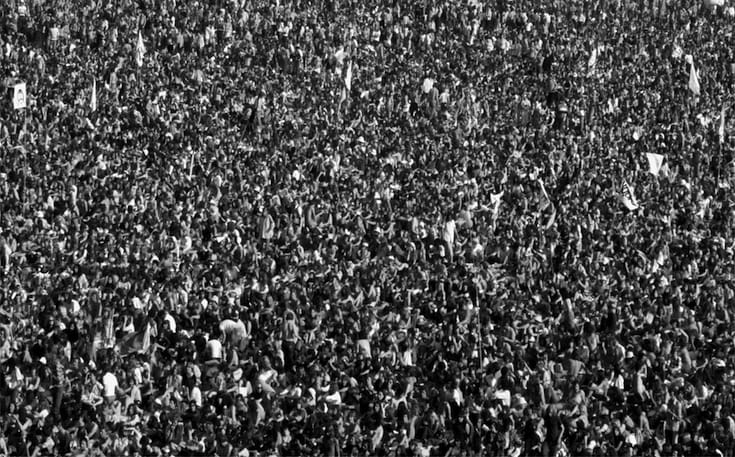
It’s one thing to report, as the project’s first surge of coverage did in April, that 80 to 89% of the world’s people want their governments to “do more” about climate change — though that same super-majority does not realize it is the majority. It’s another to put names and faces to that abstract number — to explore who these people are, why they feel the way they do, and what kinds of action they’d like to see their governments take.
That’s the goal of this next phase of The 89 Percent Project, which will serve as lead-up to the COP30 UN climate summit. We think it makes smart editorial and commercial sense for the people who make up the 89% to see themselves reflected in news coverage. We also think the world leaders and diplomats gathering in Brazil in November should be aware of how the people they represent think and feel about these issues. We suspect that, just as most of the global super-majority don’t realize they are the majority, neither do most political leaders recognize how widespread support for climate action is.
For the moment, that support remains “latent,” Anthony Leiserowitz, the director of the Yale Program on Climate Change Communication, told The Guardian in an 89% story published during the April Joint Coverage Week. “It hasn’t been activated or catalyzed. But when you break through these perception gaps, you help people understand that they’re not alone….” Thus one story for journalists to watch at COP30 and beyond is whether any politicians or social movements figure out how to mobilize this potentially massive social force.
Agence France-Presse, The Asahi Shimbun, The Guardian, The Hindustan Times, Channel 4 (UK), The Nation, Drilled, The New Republic, Mongabay, and Agência Pública are among the CCNow partners planning coverage. AFP, for example, will profile individuals from four countries talking about their personal “positive climate tipping points”: What made them shift from passively supporting stronger climate action to deciding they had to do something to make it happen?
Journalists and news outlets everywhere are invited to participate, even if they aren’t CCNow partners. Visit 89Percent.org to access links to the science behind the project, a branding kit, and ways to get in touch about anything else you might need. You can follow along on social media via the hashtag #The89Percent. CCNow will also be on the ground at COP30, connecting journalists and highlighting great stories that profile the 89%.
News coverage of climate summits usually prioritizes what world leaders and negotiators have to say, and that focus certainly has its place. This phase of 89% reporting is an opportunity to bring the global majority’s voices into the conversation. After all, every person on Earth has to live with what does, or does not, get decided at COP30. Beginning next Sunday, when the next phase of The 89 Percent Project kicks off, they get to have their say as well.
From Us
The 89 Percent Project: Phase 2. Interested in reporting a story on the 89% theme? Have questions about the new phase? Sign up to talk with a CCNow staff member next Wednesday, October 29. We’ll be hosting two “office hour” sessions:
- Session 1: 7am EST / 11am GMT / 2pm EAT / 4:30pm IST / 8pm JST
- Session 2: 12pm EST / 4pm GMT / 7pm EAT / 9:30pm IST / 1am JST
The 89 Percent Project: your story. We’ve also asked people to tell us their 89% stories, via an online form, as well as hundreds of postcards, mailed to people across the US.
The 89 Percent Project: freelance. Are you an editor interested in receiving freelancer pitches on the 89% theme? Let us know! Email us at editors[at]coveringclimatenow.org or just hit reply to this email. And learn more about The 89 Percent Project here.
Prep Your COP30 Coverage webinar series. Join us the week of November 3 for three webinars on the upcoming UN climate summit COP30, which will run November 10 to 21 in Belém, Brazil.
- COPs 101 | What Every Journalist Should Know About Climate Diplomacy. A crash course on UN climate negotiations, from the history of COPs to how decisions are made there, who’s in the room, and what makes the process so complex. November 3 at 11am ET (4pm GMT). RSVP.
- What’s at Stake at COP30? What should journalists be watching for in Belém? We’ll look at the current state of climate progress, what issues are likely to dominate the agenda, and how COP30 host country Brazil is shaping the narrative. November 4 at 11am ET (4pm GMT). RSVP.
- A COP Journalist’s Toolbox. How can you make your COP30 coverage impactful, whether you’re in Belém or working remotely? In this final session of the series, we’ll share practical tips for following the negotiations, finding fresh angles and experts, and grounding stories so they resonate with your audience. November 5 at 11am ET (4pm GMT). RSVP.
Radar Clima es el nuevo boletín de CCNow en español, diseñado para ayudarte a profundizar en temas climáticos en todas las áreas de la redacción. Cada dos semanas te propondremos un tema con ideas para cubrirlo, recursos y contactos de expertos. En números anteriores, hemos hablado de cómo cubrir la COP30, los sistemas de alerta temprana o los créditos de carbono. Suscríbete aquí.
Free COP30 newsfeed. More than 15 Brazilian newsrooms, including some based in the Amazon, will be covering COP30 in real time — and their newsfeed will be available to newsrooms everywhere. Last week, CCNow hosted a webinar detailing the project. The effort, organized by CCNow partner InfoAmazonia, will deliver in-depth and comprehensive reporting from across the conference, including negotiations in the Blue Zone, debates and activities in the Green Zone, and civil society programming.
- Stories will be available in English, Spanish, and Portuguese. Learn more and register.
Noteworthy Stories
King coal. Global use of coal reached record levels in 2024, according to the annual State of Climate Action report, “imperilling the world’s attempts to rein in global heating.” By Fiona Harvey for The Guardian…
Superpower play. The Trump administration has warned the EU that its economy and energy supplies could suffer if legislators go through with tough new climate rules. By Jamie Smyth and Alice Hancock in the Financial Times…
Delaying action. Representatives from 176 countries met in London last Friday to finalize the adoption of a landmark global tax on shipping pollution, marking “the first time an entire industry paid a price for its climate pollution.” The Trump administration, backed by Russia and Saudi Arabia, pushed countries to delay adoption for a year with threats of tariffs and visa restrictions. By Somini Sengupta for The New York Times…
Fossil fuel expansion. The Brazilian government has granted Petrobras drilling licenses for a part of the Amazon basin, marking the first oil exploration permit along the country’s ecologically fragile “Equatorial Margin.” Environmentalists warn that the decision could trigger a new oil rush on the Amazon coast, threatening nearby Indigenous communities. By Fabio Bispo for InfoAmazonia…
Climate action. In Hamburg, Germany, nearly 600,000 people voted in two referendums this past weekend. “The ‘future referendum’ for climate protection… garnered more than 300,000 votes,” and the city government must now “must now take significantly stricter action on climate issues.” From Der Spiegel…
‘Alaskan quicksand.’ Melting permafrost is sinking the village of Nunapitchuk, home to 700 Yup’ik people. In 2023, they voted to relocate to higher, drier ground. Now, they say a lack of federal support and coordination is hampering their move. Amalia Huot-Marchand and a team from the Medill School of Journalism report for PBS Newshour…
Mosquitoes on the move. The only two places in the world free of mosquitoes are Antarctica and Iceland — that is, until now. This month, three specimens were discovered in Iceland, which is warming four times faster than any other country in the Northern Hemisphere. By Helena Horton for The Guardian…
- Bonus: No matter where you live, you likely encounter insects everyday and they “can serve as powerful metaphors for larger environmental issues.” By Danae Wolfe for SEJ Journal and The Revelator…
Resources & Events
Reprint Floodlight investigations. Join The Guardian US, Grist, ProPublica, NPR, and others in Floodlight’s publisher network. All of Floodlight News’ investigations are free to be republished by other newsrooms. Sign up to get alerts when a new investigation is available.
Indigenous voices on climate. On Tuesday, October 28, at 6pm EST, the Yale Program on Climate Change Communication will host a webinar exploring how “Indigenous knowledge systems, rooted in oral traditions, deep relationships with the Earth, and community-led action [can] be used to communicate effectively on climate change.” RSVP.
The US Billion-Dollar Weather and Climate Disasters database, formerly maintained by NOAA, has a new home at Climate Central, with the latest available data through June 2025. Explore the data.
Jobs, Etc.
The Earth Journalism Network is hiring a part-time Ghana country coordinator for its Ocean Media Initiative (remote in Ghana; apply by October 25). Mongabay is seeking an Asia wire reporter (remote in Asia). El Confidencial, Teknautas, is looking for an experienced science journalist (Madrid, Spain). The New York Times is seeking a deputy editor for its climate desk (Washington, D.C.). The Seattle Times is hiring a climate reporter (Seattle, Wash.). CNN is hiring a vice president, weather (Atlanta, Ga.). The Minnesota Star Tribune is seeking student interns for its Science & Water Quality Research Internship this summer (Minneapolis, Minn.).
Fellowship. Applications are open for the 2026-27 New York Times fellowship for early career journalists. Fellows receive full-time pay, benefits, and training. The next cohort will include reporters, visual journalists, an audience editor, and an AI Initiatives fellow. Apply by November 19. Learn more.
Call for pitches: Dialogue Earth is seeking visual climate migration stories from South Asia. Learn more.
The Climate Media Awards invites journalists across Africa to submit stories about how climate change is affecting Africans’ everyday lives and what communities are doing about it. Apply by October 27. Learn more.


